Do I need an International Driving Permit to drive in Japan?
Foreigners who plan to drive in Japan but don't hold a Japanese driving licence must obtain an International Driving Permit (IDP) before arrival, unless their licence was issued in Switzerland, Germany, France, Belgium, Monaco, or Taiwan. This permit lets you drive legally in Japan for up to one year from the date you enter the country, as long as your home country-issued driving licence remains valid.
If you’re entering Japan on a digital nomad visa, you may only drive for the duration of your visa or up to one year, whichever is shorter.
Driving in Japan without an IDP is illegal, even if you hold a valid licence from your home country. Offenders may face fines, penalties, or legal action. Always carry both your original driver’s licence and your IDP when driving, as police may request to see them during traffic stops or incidents.
Which IDP do I need for Japan?
Japan only recognises International Driving Permits issued under the 1949 Geneva Convention. Japan does not recognise driving permits issued under the 1968 Vienna Convention.
That means your IDP must follow the Geneva 1949 format and be issued by an authorised body in your country, such as the AAA (American Automobile Association) or AATA (American Automobile Touring Alliance) in the United States.
If your country doesn't issue 1949-format IDPs, or isn't a signatory to the 1949 Geneva Convention, you cannot drive in Japan with an IDP. You’ll need to apply for a Japanese driving licence or convert your foreign licence (if eligible under Japan’s licence exchange system). The exception is the six countries and regions that use the Japanese translation route.
Understanding Japan’s International Driving Permit (IDP)
An International Driving Permit (IDP) officially translates your national driver’s licence, allowing you to drive legally while visiting or residing in Japan. It contains key information such as your name, photo, address, and the vehicle categories you’re permitted to operate, all translated into multiple languages.
In Japan, the IDP acts as both a translation and a validation of your foreign licence. It includes details such as the country of issue, date of issuance, and issuing authority, which help local authorities verify your eligibility to drive.
Note: Japan only recognises IDPs issued under the 1949 Geneva Convention. IDPs issued under the 1968 Vienna Convention are not accepted.
IDP validity in Japan
An IDP is valid for one year from the issue date, provided your home country driver’s licence remains valid during that period. If your national licence expires earlier, your IDP automatically becomes invalid on the same date.
For example, if your licence expires in March 2026 but your IDP was issued in January 2026, you can drive in Japan only until March 2026, not January 2027.
Exceptions & Restrictions
While most foreign drivers need an IDP, Japan recognises specific countries and regions under different arrangements.
Countries exempt from the IDP requirement
Drivers with licences issued in the following countries and regions do not need an IDP to drive in Japan:
Country / Region | Requirement | Notes |
Switzerland | Japanese translation of national licence | Obtain from JAF or embassy |
Germany | Japanese translation of national licence | JAF or embassy-issued |
France | Japanese translation of national licence | JAF or embassy-issued |
Belgium | Japanese translation of national licence | JAF or embassy-issued |
Monaco | Japanese translation of national licence | JAF or embassy-issued |
Taiwan | Japanese translation of national licence | Translation from JAF or authorised office |
These translations must be issued by either:
The Japan Automobile Federation (JAF), or
Your home country’s embassy or consulate in Japan
Without this official translation, your foreign licence alone is not valid in Japan.
U.S. military personnel
U.S. military and civilian personnel, as well as their dependents, stationed in Japan under the U.S.–Japan Status of Forces Agreement (SOFA) can apply for a U.S. Forces Japan Operator’s Permit (USFJ Form 4EJ). This serves as their driving authorisation in Japan, replacing the need for an IDP.
Decision path: IDP vs JAF Translation vs Conversion
If you’re unsure which document you need to drive legally in Japan, use this quick guide to determine whether you need an International Driving Permit (IDP), a Japanese translation of your foreign licence, or a licence conversion.
Step 1: Check where your licence was issued
Licence Issued In | What You Need to Drive in Japan | Validity | Notes |
Countries that are members of the 1949 Geneva Convention | IDP (1949 format) + Original Licence | 1 year | Most countries, including the U.S., the U.K., Australia, and Canada |
Non-Geneva Members | Not eligible for IDP | N/A | Must obtain a Japanese licence |
Switzerland, Germany, France, Belgium, Monaco, Taiwan | Japanese translation of national licence | 1 year from entry into Japan | Translation must be issued by JAF or your embassy/consulate |
Countries with 1968 Vienna IDPs only | Japan does not accept 1968-format IDPs | N/A | JAF translations are only for the six countries and regions above. Otherwise, you need a conversion to a Japanese licence, which only residents can get. |
Step 2: Consider your length of stay
Stay Duration | Recommended Option | Details |
Short stay (≤ 1 year) | IDP (1949 format) | Bring both IDP + home licence |
Medium-term (1–3 years) | Licence Conversion | Your one-year driving period only restarts after 3 consecutive months outside Japan |
Long-term (> 1 year) | Licence Conversion | Apply at a local Driver’s Licence Centre |
Where can I get an International Driving Permit (IDP) for Japan?
You must apply for an International Driving Permit (IDP) in your home country before arriving in Japan. Japan does not issue IDPs locally, and foreign residents or visitors cannot obtain them within Japan.
Your IDP must follow the 1949 Geneva Convention format and be issued by an authorised automobile association in your country.
To apply, you’ll need to submit a valid national driver’s license, recent passport-sized photos, and a permit fee.
Below are the approved places to apply for an IDP by country. (Note that this list is not exhaustive. If your country is not listed, please contact the nearest Japanese Embassy for more information.
The U.S.: The American Automobile Association (AAA) and the American Automobile Touring Alliance (AATA) are the only two organisations authorised by the US State Department to issue IDPs in the U.S. The processing fee is typically $20, but some AAA offices may charge additional sales tax, so be prepared.
The U.K.: If you have a full UK driving licence, you can get an IDP at any PayPoint location that offers the service. The processing fee is £5.50. Ask for the 1949 IDP, which is the one Japan accepts.
Australia: Australians can apply for an IDP through the Australian Automobile Association (AAA). The processing fee is AU$51.
Canada: Canadians can get their IDP from any Canadian Automobile Association (CAA) office. In addition to meeting other requirements for getting an IDP in Canada, applicants must pay a processing fee of CA$ 31.
Philippines: Filipinos can obtain an IDP by applying to the Automobile Association Philippines (AAP). The processing fee is ₱ 4200.
Singapore: IDPs in Singapore are issued by the Automobile Association of Singapore (AAS). You’ll need to pay a fee of S$20.
For the most up-to-date information and to access application forms, applicants should visit their local automobile association's official website.

How long does it take to get an IDP for Japan?
Processing time for an International Driving Permit (IDP) depends on your home country and whether you apply in person or by mail/online. While many automobile associations issue the permit within a few days, apply at least one month before your trip to avoid delays.
Here’s how long it typically takes in different countries:
United States: The AAA or AATA can issue your IDP on the same day if you apply in person, or within 2–3 weeks by mail.
United Kingdom: If you have a full UK driving license, you can get the IDP at a Paypoint location almost immediately after you submit your application. Online applications are not available.
Australia: The Australian Automobile Association (AAA), via local motoring clubs (e.g. NRMA, RACV), issues IDPs in 1–5 business days.
Canada: The Canadian Automobile Association (CAA) provides same-day service in person or 2–3 weeks via mail.
Singapore: The Automobile Association of Singapore (AAS) offers same-day in-person issuance and 3–5 working days online.
Tip: For faster turnaround, apply in person; mail or online applications can take longer due to postal delays.
How to get a Japanese translation of your driver’s license
A Japanese translation is an officially recognised document that converts your foreign licence details, such as name, address, licence class, and validity, into Japanese for local verification.
Like an IDP, it lets you drive for up to one year from the date you enter Japan, and you must carry it with your original licence whenever you drive.
The authorised bodies where you can get these translations include:
Japan Automobile Federation (JAF): This is Japan’s primary authority for driver’s license translations. The translation service costs ¥4,000 and is issued anywhere from the same day to two weeks after you apply. Once processed, you’ll receive a reference number, which you can use to print the translated document. When applying for a translation, you may also need to provide proof that you held your license for a certain period, depending on your situation. JAF only accepts applications with a Japanese address and does not post translations overseas.
Taiwanese licence holders: You can get the translation from JAF. Taiwan has no embassy in Japan, so ask JAF or Taiwan’s representative office in Japan about other options.
German licence holders: Use JAF, the German embassy, or a consulate in Japan. Japan’s rules name only these issuers, so a translation from another body, such as ADAC, may not be accepted.
Converting to a Japanese driver's license for long-term stays
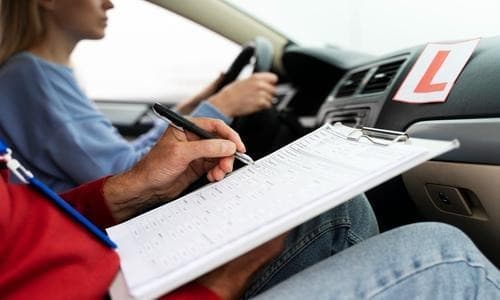
A woman taking a driving license test
If you plan to stay in Japan long-term and want to drive, you may need to convert your foreign driving licence to a Japanese one.
This process, officially known as Gaimen Kirikae (外免切替), meaning foreign licence conversion, ensures full compliance with Japan’s road safety and licensing regulations.
Your International Driving Permit (IDP) is only valid for one year (or the length of your visa, whichever is shorter). After that, you must hold a Japanese driving permit to continue driving legally.
This requirement applies to foreign residents, long-term visa holders, and digital nomads staying beyond a year. Since 1 October 2025, only people registered as residents of Japan can convert. Tourists and other short-term visitors can no longer apply.
To convert your foreign driver’s license to a Japanese one, you must meet the following criteria:
Your foreign driver’s license must be valid.
You must prove you lived in the country that issued your driver’s license for at least three months after you obtained it. This is to demonstrate that you have adequate driving experience in your home country.
Note: If you are a resident of Japan and have been away for less than three consecutive months, your one-year driving period does not restart when you return, even with a newly issued IDP. It only restarts after you have spent at least three consecutive months outside Japan.
Required documents for a Japanese license
To apply for a Japanese driver’s license, you will need to gather several documents, including:
Application form
Your passport
The original copy and one photocopy of your valid foreign driver’s license
A Japanese translation of your driver’s license obtained from the JAF or your country’s embassy or consulate in Japan
Your residence certificate (Juminhyo), showing your nationality, residence status and period of stay
Proof that you lived in the issuing country for at least three months after getting your licence, such as passport entry and exit stamps
A recent passport-sized photograph measuring 3 cm x 2.4 cm
Tests you must take
A written test covering road rules, traffic signs, and driving customs in Japan. Since 1 October 2025, it has 50 questions, and you need 90% to pass, up from 10 questions and a 70% pass mark.
A practical driving exam that demonstrates your ability to operate a vehicle safely according to Japanese driving practices.
A health assessment, including vision, hearing, and motor-reaction tests, to ensure you are fit to drive.
Fees
The costs associated with converting your driver’s license include:
An application processing fee of about ¥2,550.
A license issuance fee of ¥2,050 (provided you pass all the tests).
The process may vary slightly by prefecture or region in Japan. Some countries, such as the UK, Australia, Canada, and South Korea, have agreements with Japan that may exempt their citizens from some driving knowledge and practical tests. Others, like Brazil, may require additional procedures or exams. Always verify specific requirements with the local driver’s licence centre.
Driving in Japan with a US, UK, or Foreign Licence
U.S. citizens cannot drive in Japan using only their U.S. driver’s licence. To drive legally, you must obtain an International Driving Permit (IDP) based on the 1949 Geneva Convention before arriving in Japan. This IDP must be carried alongside your valid U.S. licence at all times while driving.
The IDP is valid for up to one year from the date you enter Japan, even if your stay is longer. Without it, you may be denied a car rental or face legal penalties if authorities stop you.
If you plan to live in Japan long term, you’ll need to convert your U.S. licence to a Japanese one. The process usually involves a written test, an eye exam, and in some cases, a practical driving test, depending on your state of issue and driving history. Licences from Ohio, Oregon, Colorado, Virginia, Hawaii, Maryland and Washington are currently exempt from the knowledge and driving tests.
To drive in Japan, always carry your U.S. licence, IDP, and passport with proof of entry. Note that digital IDPs or permits obtained outside the U.S. are not accepted.
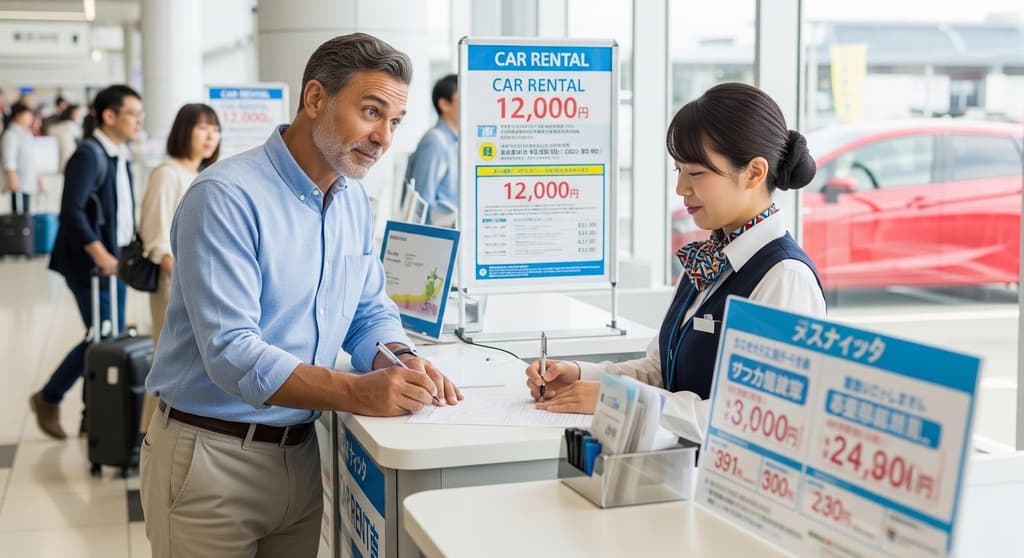
alt text:foreigner renting a car in japan
How to rent a vehicle in Japan using an IDP or a translated driver’s license
Renting a vehicle in Japan is straightforward. Here’s what you must do:
Choose a Reliable Rental Company: Japan offers several well-known car hire agencies, including Nippon Rent-A-Car, Toyota Rent a Car, and Times Car Rental, that provide English-language support for international visitors.
Reserve Your Vehicle in Advance: Book your rental car in advance to get the best rates and availability, especially during peak travel seasons.
Have the Necessary Documents: When renting a vehicle, bring your passport, original driver’s license, and a valid IDP issued under the 1949 Geneva Convention on Road Traffic, or your official Japanese translation if your licence is from one of the six countries and regions above. Rental companies may refuse service if your IDP does not meet these criteria.
Understand Rental Policies: Before finalising your rental, review the terms and conditions for rental duration, insurance options, fuel policies, and return procedures. If you're in an accident, contact the insurance company immediately and provide all required documentation.
Inspect the Vehicle: Before leaving the rental lot, inspect the vehicle for any existing damage and ensure all features function correctly. Report any damage to the agency immediately to avoid disputes when returning the car. If you are involved in an accident, you may need to show your IDP and other documents to the insurance company.
Familiarise Yourself with Local Driving Laws: In Japan, unless road signs indicate otherwise, the default speed limits are 60 km/h on ordinary roads with a centre line or marked lanes, 30 km/h on ordinary roads without them (since 1 September 2026), and 100 km/h on expressways. Always follow posted speed limits and stay alert, as speed cameras commonly enforce these regulations.
Return the Vehicle: Return the vehicle on time and in the same condition as when you rented it. Fill the fuel tank to the same level you picked it up with, unless your rental agreement states otherwise. You may also choose to purchase additional services, such as insurance or fuel packages.
When paying for gas in Japan, most stations accept cash, especially at self-service pumps, where you may need to use a separate change machine. If you have trouble at a self-service station, an attendant is usually available to assist.
Parking in rural areas, small towns, or at certain attractions is often free, unlike the paid parking typically found in city centers.
Mandatory use of child safety seats
When renting a vehicle, ensure you request a suitable child seat in advance if you have children under six years old. This is because the Japanese law Article 71-3, Paragraph 3 of the Road Traffic Act mandates the use of appropriate child safety seats for children under six years old. Non-compliance can result in fines and compromise young passengers' safety.
How can Translayte help you drive legally in Japan?
When travelling to Japan, having an International Driving Permit (IDP) is only part of the requirement for driving legally.
You’ll also need the right documents and certified translations to comply with Japanese regulations. Whether you’re converting your licence through Gaimen Kirikae or renting a car for short-term travel, authorities require key documents such as your passport, foreign driver’s licence, and a Japanese translation issued by JAF.
If you’re applying from outside Japan, local offices may also require an apostille or legalisation for some documents.
At Translayte, we help you prepare all the documents you need for your move to Japan, or for use abroad, with fast, accurate, officially recognised translations. We offer certified Japanese translations for:
Japanese driving licences for use outside Japan
Residence certificates (Jūminhyō)
Passports and visas
Legal, financial, or medical records required for long-term stays
Apostille or legalisation support for documents issued outside Japan
Need certified translations for your move to Japan or to use Japanese documents abroad? Request a free quote today to get started.
.jpg)