Why do authorities ask for a translated marriage certificate?
Authorities request a translated marriage certificate because they must fully and clearly understand the document before making any official decision. If a marriage certificate is written in a language the authority does not use, it cannot be assessed properly without an accurate translation.
A clear understanding is essential
Immigration offices, embassies, courts, and civil registry offices rely on marriage certificates to verify key details, including the names of both spouses, the date and place of marriage, and the marriage's legal validity. Even small errors or missing details can cause confusion or delays.
Legal accuracy matters
A marriage certificate is a legal document, not a personal record. Authorities need translations that reflect the exact meaning and structure of the original document. This includes stamps, official notes, and handwritten entries. An incorrect or incomplete translation can affect the outcome of an application.
Used for decisions, not reference
Translated marriage certificates are used to make binding decisions, such as approving visas, granting residency, registering a marriage, or issuing official documents. Because these decisions have legal consequences, authorities require translations they can trust.
Real-world requirements from official bodies
Different authorities have clear rules on how marriage certificates must be translated:
UKVI (UK Visas and Immigration) requires marriage certificates to be translated into English or Welsh by a professional translator. The translation must include confirmation of accuracy, the translator’s details, and their signature.
EU immigration bodies and civil registry offices often require translations to be completed by a sworn or officially recognised translator, especially for marriage registration, residence permits, or family reunification applications.
Because these authorities depend on translations to verify marital status and make legal decisions, they generally do not accept informal or self-translated documents, even if the applicant speaks both languages fluently.
Can I translate my own marriage certificate?
In most official cases, no. Even if you are fluent in both languages, immigration authorities, embassies, and government offices generally do not allow you to translate your own marriage certificate for official use.
Why self-translation is usually not accepted
It’s considered a conflict of interest: When you translate your own marriage certificate, you are both the applicant and the translator. Authorities view this as a conflict of interest because there is no independent party verifying the translation's accuracy.
There’s no independent verification: Official bodies must be able to trust that the translation is complete and accurate. A self-translation does not provide independent verification, even if the translation is carefully and honestly done.
Certified translations are required: Most authorities require a certified translation of the marriage certificate, including a signed statement from a qualified translator or translation agency confirming that the translation is accurate and complete. This certification cannot be provided by the document owner.
What official authorities say
USCIS (United States Citizenship and Immigration Services): USCIS requires all foreign-language documents, including marriage certificates, to be submitted with a certified English translation. The certification must be signed by the translator, confirming their competence and the translation's accuracy. While USCIS does not explicitly ban self-translation, translations completed by the applicant are frequently questioned or rejected for lack of independence.
UK Home Office (UKVI): The UK Home Office requires marriage certificate translations to be completed by a professional translator or translation company. The translation must include confirmation that it is a true and accurate translation, along with the translator’s name, signature, and contact details. Self-translated documents do not meet these requirements.
Embassies and consulates: Many embassies and consulates require marriage certificates to be translated by a certified or sworn translator, depending on the country. Self-translations are typically rejected, as embassies rely on officially recognised translators to ensure legal accuracy.
Because marriage certificate translations are used for immigration decisions, visa approvals, and legal registrations, self-translation is rarely accepted and often leads to delays or rejections.
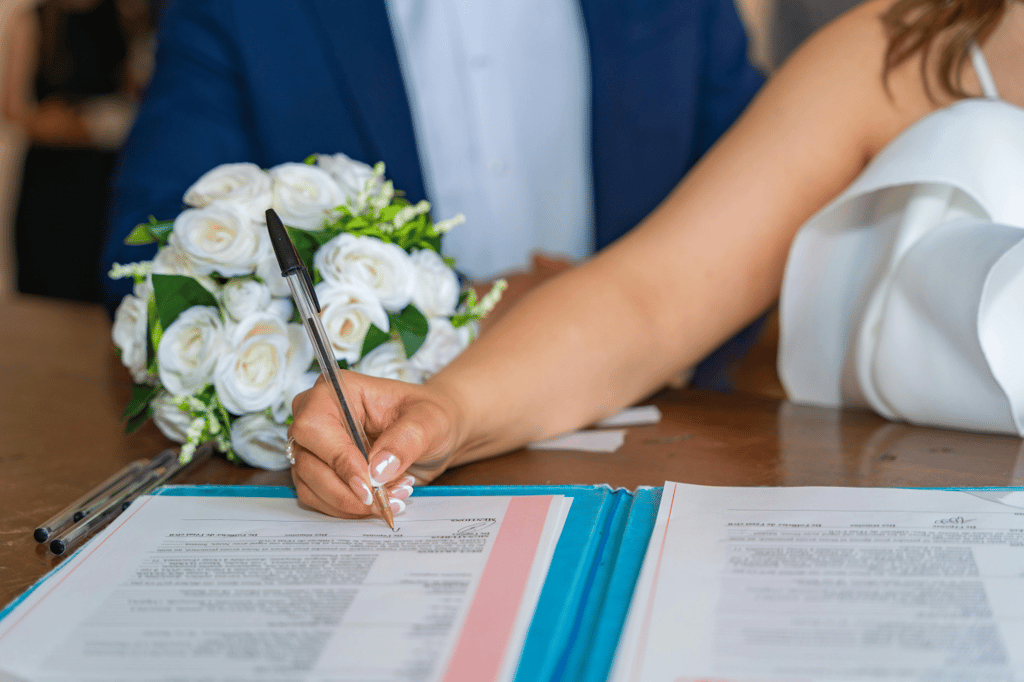
When is self-translation not accepted?
Self-translated marriage certificates are routinely rejected in most official and legal situations. This is because authorities require independent, certified, and legally reliable translations.
You should expect self-translation not to be accepted in the following cases:
Immigration and visa applications
Immigration authorities rely on marriage certificates to assess eligibility for visas and residence permits. For this reason, they require certified translations and generally reject self-translated documents.
Spouse or family sponsorship
When sponsoring a spouse or family member, authorities must confirm the legal validity of the marriage. Self-translations are not accepted because they lack independent verification.
Permanent residence or citizenship applications
Marriage certificates are often used to support long-term status or citizenship claims. These applications involve strict checks, and self-translated documents are commonly refused.
Court or government submissions
Courts, civil registry offices, and other government bodies require legally accurate translations. Self-translations are not considered reliable evidence and are typically rejected.
In all of these situations, submitting a self-translated marriage certificate can result in delays, requests for re-submission, or outright rejection, which is why authorities strongly prefer professionally certified translations.
Who is allowed to translate a marriage certificate?
In most official cases, marriage certificates must be translated by an independent, qualified professional. Authorities want to ensure the translation is accurate, complete, and unbiased.
Who is generally accepted
Professional translators: Professional translators with experience in legal and official documents are commonly accepted. They understand how to accurately translate marriage certificates, including stamps, annotations, and official wording.
Certified translation agencies: Many authorities accept translations completed by certified translation agencies. These agencies provide a certificate of accuracy, confirming that the translation is complete and true to the original document.
Sworn translators (where required by law): In some countries, particularly in parts of Europe, marriage certificates must be translated by a sworn or officially recognised translator. These translators are authorised by a court or government body, and their translations carry legal validity.
Who is usually not allowed?
Applicants, spouses, and family members are generally not permitted to translate marriage certificates for official use. Even if they are fluent in both languages, authorities consider this a conflict of interest and do not accept self-translations or family-translated documents.
To avoid delays or rejection, it is always safest to use a professional translator or certified translation service that meets the requirements of the receiving authority.
How Translayte can help you
If you need a marriage certificate translation that will be accepted the first time, Translayte makes the process simple, fast, and reliable.
Translayte provides certified marriage certificate translations that meet the requirements of immigration authorities, courts, embassies, and government offices worldwide. Every translation is completed by a qualified professional and includes a signed certificate of accuracy, so you don’t have to worry about compliance or rejection.
What you get with Translayte
Certified translations accepted by USCIS, the UK Home Office, embassies, courts, and civil registries
150+ language pairs, including Spanish, French, German, and more
Whether you’re applying for a visa, sponsoring a spouse, registering a marriage abroad, or submitting documents to a government authority, Translayte helps you avoid delays by delivering official marriage certificate translations that meet all requirements.
Learn more about our Marriage Certificate Certified Translations services.
How to get your marriage certificate translated correctly
Getting your marriage certificate translated correctly is important, especially when it’s being used for immigration, legal, or government purposes. Following the right steps can help you avoid delays or having your application rejected.
Step 1: Check the authority’s requirements
Before ordering a translation, confirm what the receiving authority requires. Some organisations ask for a certified translation, while others may require a sworn translation. Immigration offices, courts, and embassies usually have specific rules about who can translate the document and what certification must be included.
Step 2: Use a professional translator or certified agency
Choose a professional translator or a certified translation agency that specialises in official documents. Avoid self-translation or using family members, as these are commonly rejected.
Step 3: Make sure certification is included
A proper marriage certificate translation should include a certificate of accuracy signed by the translator or an agency. This confirms that the translation is complete and accurate and meets official requirements.
Step 4: Ensure all details are translated
Everything on the marriage certificate must be translated, including stamps, seals, handwritten notes, and official annotations. Missing details can cause delays or rejections.
Step 5: Review before submission
Before submitting the translation, review it carefully to ensure names, dates, and places match the original document exactly. Even small errors can create problems with official applications.
Conclusion
In most official situations, translating your own marriage certificate is not accepted, even if you speak both languages fluently. Authorities rely on marriage certificate translations to make legal and administrative decisions, which is why they require independent, certified translations.
Using a certified translation of a marriage certificate helps reduce the risk of delays, repeat requests, or rejection. It ensures the document is accurate, complete, and compliant with the rules set by immigration offices, courts, embassies, and government agencies.
Always follow the specific requirements of the authority you are submitting to, as translation rules can vary by country and purpose.
Using a professional service like Translayte, ensures that your marriage certificate translation will be accepted the first time, saving you time, stress, and unnecessary costs. Ready to have your marriage certificate translated for USCIS, UKVI, or IRCC? Request a free quote to get started.