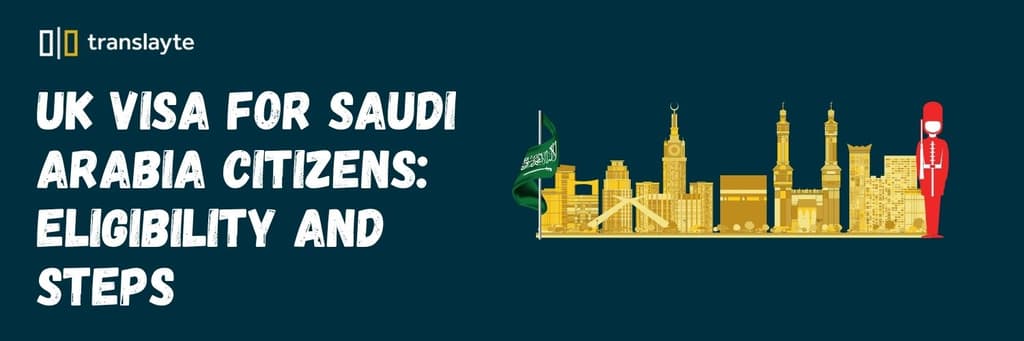
Do Saudi Arabians need a visa for the UK?
Saudi Arabian citizens no longer require a traditional UK Visitor Visa for short trips for tourism, business, medical treatment, visiting family/friends, or non-degree short studies. Instead, they are required to obtain a UK Electronic Travel Authorisation (ETA) for these purposes.
The ETA requirement came into effect on 22 February 2024, replacing the previous Electronic Visa Waiver (EVW) scheme for Saudi citizens. The UK ETA application opened shortly before that date.
Key features of the ETA:
Valid for 2 years or until the passport expires (whichever comes first).
Allows multiple entries during its validity.
Allows each stay to be up to 6 months per visit under the ETA for eligible purposes (tourism, business visits, short‑term study, etc.).
For stays exceeding six months, for longer‑term education, work, or joining family permanently, a full UK visa is still required. The ETA does not cover these cases.
Travel Purpose | ETA Needed | Full Visa Needed |
|---|
Tourism | Yes | No |
Business visit | Yes | No |
Study under 6 months | Yes | No |
Work | No | Yes |
Family settlement | No | Yes |
Overview of UK visa types for Saudi Arabian citizens
Saudi nationals must obtain the appropriate UK visa or Electronic Travel Authorisation (ETA), depending on the reason and duration of their stay.
UK visitor & tourist visas
Electronic Travel Authorisation (ETA): The UK ETA is required for Saudi citizens visiting the UK for short stays of up to 6 months, including tourism, business, short-term study, or medical treatment.
Standard visitor visa: This visa is generally for travellers who are not eligible for the ETA or who may require a full visa application due to more complex travel circumstances. It allows visits for tourism, business activities, medical treatment, short courses and temporary visits. Applicants usually need to provide biometrics and supporting documentation.
Marriage visitor visa: The Marriage Visitor Visa is for Saudi citizens travelling to the UK to get married or register a civil partnership. This visa is valid for up to 6 months and does not allow long-term residence. It cannot usually be extended or switched to another visa category from within the UK
UK student visas
The UK offers different study visa routes depending on the applicant’s age and the duration of study.
Student visa: The visa is for full-time academic courses lasting longer than 6 months at licensed UK educational institutions. Applicants generally need a Confirmation of Acceptance for Studies (CAS), proof of English language ability and evidence of financial support and accommodation.
Child student visa: This visa is designed for children aged 4–17 studying at an independent UK school. Applicants must show proof of school enrolment, suitable care arrangements and evidence of financial support and accommodation.
Short-term study visa: This visa is primarily for English-language courses lasting 6 to 11 months. This visa is only for English-language studies and does not permit long-term academic study or employment.
UK work visas
Saudi citizens intending to work in the UK must apply for the appropriate work visa based on their profession and employment arrangement.
Skilled worker visa: This is for applicants with a qualifying UK job offer from a licensed sponsor. Requirements typically include employer sponsorship, meeting salary thresholds and working in an eligible occupation. This visa can usually be renewed and may lead to permanent residence in the UK.
Health and care worker visa: This is a specialised Skilled Worker route for qualified healthcare professionals such as doctors, nurses, and care workers employed by the NHS or approved providers. It often offers lower application fees, faster processing times and reduced healthcare surcharge costs.
UK family & marriage visas
Family-related visas allow Saudi citizens to join close relatives living in the UK.
Family visa: The UK Family Visa is for spouses, children, parents, or dependent relatives of British citizens or UK residents. Applicants may need to provide proof of relationship, evidence of financial support and English language proficiency documents. Depending on the category, this visa may lead to settlement in the UK.
Marriage visitor visa: Saudi citizens travelling specifically to marry or form a civil partnership in the UK may use this visa for short stays.
UK transit visa
A UK Transit Visa may be required if a Saudi citizen is passing through the UK en route to another destination. Transit visa categories include the Visitor in Transit Visa and the Direct Airside Transit Visa (DATV). Many Saudi citizens may not require a transit visa if they already hold a valid UK ETA or qualify for a transit exemption.
Discover other types of UK Visa
UK visa requirements for Saudi Arabia applicants
Saudi Arabian nationals applying for a UK visa must meet specific eligibility and documentation requirements depending on the visa category they choose. While exact requirements vary for visitor, student, work, and family visas, most applicants are expected to provide the following documents and supporting evidence.
Identity documents
For some visa categories, applicants may also need to provide previous travel history or copies of expired passports.
Financial proof
Recent bank statements
Salary slips or proof of income
Sponsorship documents (if another person is funding the trip)
Proof of tuition payment or accommodation payment, where applicable
Student and family visa categories often have minimum financial maintenance requirements.
Travel & accommodation proof
Flight or travel itinerary details
Hotel reservations or accommodation information
Invitation letters from UK-based hosts
Details of planned activities during the stay
Visitor visa applicants are also commonly expected to demonstrate strong ties to Saudi Arabia and to intend to return after the trip.
Employment or study documents
Employment letters or work contracts
Certificate of Sponsorship (CoS) for work visas
Confirmation of Acceptance for Studies (CAS) for student visas
Business registration documents for self-employed applicants
Academic certificates and transcripts
These documents help UK authorities verify the purpose of travel and visa eligibility.
Police clearance & TB test
TB testing is commonly required for stays longer than 6 months.
For the most up-to-date guidance, visit the UK Government’s visa and immigration official website.
Which documents need certified translation for UK visa?
Any supporting document that is not written in English or Welsh must usually be accompanied by a certified translation for UK visa applications.
This commonly applies to:
A UK-compliant certified translation should typically include:
A complete and accurate translation of the original document
The translator or translation company’s details
A signed certification statement confirming accuracy
The date of translation
If you need certified translations for a UK visa application, Translayte provides certified document translations accepted for UK immigration, study, work, and family visa applications. Request a free quote.
Learn more about UK visa translation requirements
How to apply for the UK visa from Saudi Arabia
Determine the visa type
Assess the appropriate UK visa type based on the purpose of your travel (e.g. tourism, business, study, work, or family visit). Visit gov.uk/check-uk-visa to determine which visa you need.
Gather required documents
Ensure all necessary documents are collected and organised. These typically include a valid passport, bank statements, proof of accommodation, a travel itinerary, and supporting letters (e.g., an invitation or sponsorship letter).
Get documents translated
Translate any non-English documents (e.g. birth certificates, police clearance) using certified translation services. Use Translayte to provide UKVI-accepted certified translations.
Submit application online
Create an account and complete the visa application form on the official UK Visas and Immigration website. Pay the required visa fee and Immigration Health Surcharge (IHS) if applicable. Apply at: www.gov.uk/apply-uk-visa
Book and attend biometrics appointment
Schedule an appointment at your nearest UK Visa Application Centre (VAC) to provide fingerprints and a photo. Bring all original documents and your appointment confirmation.
Attend visa interview (if required)
Some visa categories (especially work, study, or family visas) may require an interview.
Prepare by reviewing your application details and being ready to answer questions about your travel plans, finances, and intent.
Receive visa decision
After processing (which typically takes from a few days to several weeks), you will receive an email or notification to collect your passport or view your visa decision online. Processing times vary by visa type and service level (standard vs priority).
Prepare for travel
Once approved, check your visa vignette or digital status to confirm accuracy. Pack all necessary documents for border entry and ensure compliance with UK entry rules.
Can Iqama Holders in Saudi Arabia apply for a UK visa?
Yes. If you are a resident in Saudi Arabia with a valid Iqama (residency permit), you can apply for a UK visa from within Saudi Arabia. However, your eligibility, visa type, and application process will be based on your passport nationality, not your Iqama status.
This means that while you can submit your application and attend your biometric appointment at a UK Visa Application Centre (VAC) in Saudi Arabia (such as Riyadh, Jeddah, or Al Khobar), you must meet the UK visa requirements specific to the country that issued your passport.
For example:
Your Iqama serves only to confirm your legal residency in Saudi Arabia and your right to apply from that location, it does not affect visa eligibility or grant you access to the UK’s ETA (Electronic Travel Authorisation) system, which is only available to nationals of certain countries (e.g., Saudi citizens, UAE, Kuwait, etc.).
Common reasons UK visa applications get rejected
UK visa applications can be refused for a variety of reasons, some of the most common reasons include:
Insufficient financial evidence: Applicants may fail to demonstrate sufficient funds to support themselves during their stay or to provide clear banking and income records.
Incomplete or incorrect documentation: Missing forms, expired passports, incorrect information, or unsupported claims can lead to refusal.
Failure to prove intent to return home: Visitor visa applicants must usually demonstrate strong ties to Saudi Arabia, such as employment, business ownership, family responsibilities, or property ownership.
Inconsistent information during the application process: Differences between application forms, supporting documents, and interview answers may raise concerns about credibility.
Previous immigration violations: Past visa overstays, deportations, or breaches of immigration rules in the UK or other countries can negatively affect an application.
Failure to meet English language or sponsorship requirements: Student, work, and family visa categories often require approved English tests, sponsorship documents, or minimum salary thresholds.
Improperly translated documents: Documents not written in English or Welsh may be rejected if they are not accompanied by compliant certified translations.
Tips for a successful UK visa application
Ensure all documentation is complete, accurate, and up-to-date to avoid delays.
Double-check the specific requirements for your chosen visa type.
Using certified translation services like Translayte can enhance your application's credibility.
Additionally, be honest and consistent in your visa interview; practising with common questions can increase confidence.
.png)