Can you drive in Argentina with a foreign licence or IDP?
Yes, you can drive in Argentina with your valid foreign driving licence and an International Driving Permit (IDP) for up to 90 days if you're a tourist or short-term visitor.
But once you become a long-term resident, you must exchange your foreign licence for an Argentine driving licence. Continuing to drive on a foreign licence after becoming a resident puts you at risk of fines.
Rules can also differ by municipality. Buenos Aires City, for example, has its own licensing authority and specific procedures. Always check directly with the local Centro de Licencias de Conducir in your area.
Do you need to convert your foreign driving licence in Argentina?
Yes, you will need to convert your foreign driving licence in Argentina. Homologar or canjear la licencia de conducir means exchanging your foreign licence for an Argentine national driving licence, so you can drive legally as a resident.
But this does not apply to everyone. You’ll only need to convert your foreign licence if;
You've obtained a DNI with domicile in Argentina (i.e., you're a legal resident).
You're working or studying long-term and driving regularly.
Your employer or insurer requires an Argentine licence.
Argentina has bilateral agreements with five countries: Chile, Italy, Colombia, Spain, and Bolivia. Nationals of these countries can drive in Argentina for up to one year before exchanging their licence. The Colombia agreement allows nationals to drive for up to 180 continuous or discontinuous days per calendar year. After which, they will have to exchange their foreign licence.
Which countries' driving licences can be exchanged in Argentina?
Argentina has formal bilateral licence recognition and exchange agreements with five countries. Here’s a breakdown of the timeline for each country;
If your licence was issued by any other country, such as the U.S., UK, France, Germany, etc., there is no exchange agreement. You will go through the full licence process as a first-time applicant. This includes a road safety course, psychophysical evaluation, theory exam, and practical driving test.
Who is eligible to convert a foreign licence in Argentina?
To exchange your foreign licence in Argentina, you must meet the following requirements;
Hold a valid foreign driving licence
Be a legal resident in Argentina, proven by an Argentine DNI with a current domicile, or a residency certificate (disposición de residencia) from the Dirección Nacional de Migraciones.
Meet the minimum age requirement for the licence class you are applying for.
For nationals of the five agreement countries (Bolivia, Chile, Colombia, Spain, Italy), the additional requirement is that your foreign licence must have been issued before you obtained Argentine residency.
For Chilean and Bolivian nationals, the canje application must be submitted to ANSV within the first year of residence. For Colombia, within 365 days of obtaining residency.
Each municipality sets its own detailed rules. If you don’t know what applies to you, go directly to your local Centro de Licencias de Conducir for authoritative guidance.
Types of driver's licences in Argentina
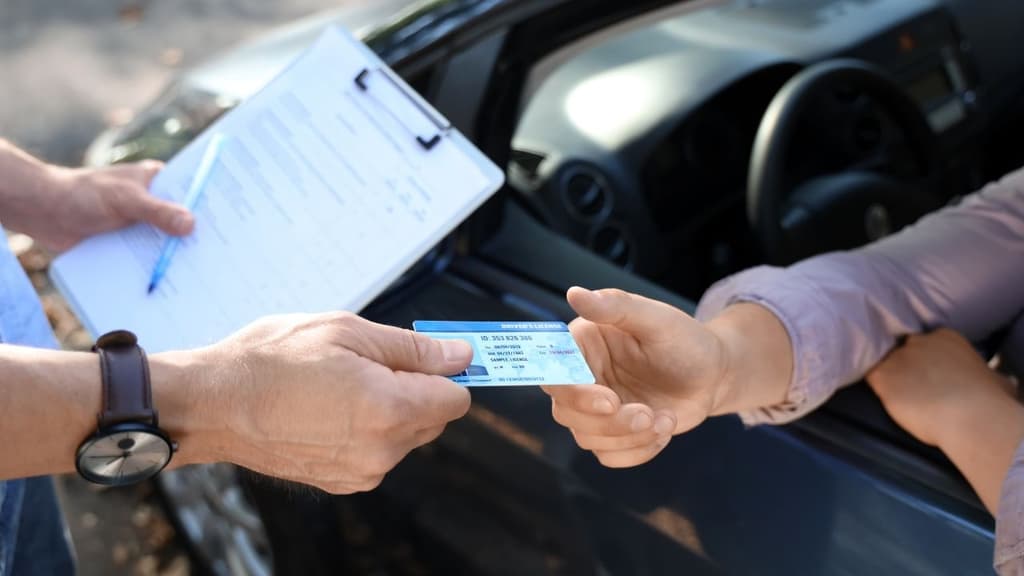
Argentina uses a category-based licence system. Hence, your home country licence class may differ from the Argentine equivalent.
The licence categories in Argentina are;
Class B1: This is the standard private vehicle licence. It covers automobiles, vans, pickup trucks, and motorised caravans up to 3,500 kg for private use. Minimum age is 17. This is the Argentine equivalent of a standard EU category B or US non-commercial licence. It is valid for 5 years for ages 17 to 65, 3 years for ages 66–70, and 1 year for ages 71 and over.
Class B2 covers the same vehicles as B1 but with a trailer up to 750 kg. Requires 1 year of seniority in B1 first. Minimum age 18.
Class A: This covers motorcycles and similar vehicles in four subclasses based on engine size (A1.1: up to 50cc; A1.2: up to 150cc; A1.3: up to 300cc; A1.4: over 300cc). Minimum age ranges from 16 to 21, depending on the subclass.
Class C, D, and E: These are professional categories for heavy trucks (C), passenger transport (D), and articulated vehicles and special machinery (E). All require a minimum age of 21, at least one year of seniority in B1, and, for class D, a clean criminal background certificate. These categories involve more documentation, additional exams, and longer processing times.
The municipality decides which Argentine category corresponds to your foreign licence. If your foreign licence covers multiple vehicle types, the local authority will assess each category individually.
Documents required for Argentina foreign driving licence conversion
Requirements vary by municipality, so use this list as a starting point.
For nationals of Bolivia, Chile, or Colombia (canje pathway):
Valid foreign driving licence (original + copy), obtained before Argentine residency
Argentine DNI showing current domicile
For Chile canje: your Chilean identity card (cédula de identidad) original + copy
For class D: certificate of criminal antecedents (certificado de antecedentes penales)
Payment receipt for CENAT (and CEPAT if in Buenos Aires Province)
ANSV canje/equivalencia certificate (obtained in advance by email)
For all other nationalities (full "original" licence process):
Valid foreign driving licence (original + copy)
Argentine DNI showing current domicile, or, if in process, certificate of residencia precaria with CABA domicile plus passport
Certificado de Legalidad of your foreign licence, required in Buenos Aires City to avoid being classified as a principiante (learner driver); typically issued by your home-country authority or consulate
Certified Spanish translation of your foreign driving licence and any supporting documents not in Spanish.
Payment receipt for CENAT (in Buenos Aires Province: also payment receipt for CEPAT)
Medical/psychophysical certificate, if required by the local authority for your category
For class D: criminal background certificate
Proof of address (utility bill, rental contract) where required by the local authority
Passport photos if requested
Note: Buenos Aires City requires physical copies of all required documents. Digital copies are not accepted. If any of your documents, such as your foreign licence, the certificado de legalidad, or any medical or legal records, are not in Spanish, you'll need a certified translation in Argentina. Translayte has completed over 100 certified translation orders for clients in Argentina, accepted by Argentine authorities nationwide.
Step-by-step: how to convert a foreign driving licence in Argentina
The process you undergo depends on whether you are from one of the five countries with a bilateral agreement with Argentina.
If your country has an exchange agreement (Bolivia, Chile, Colombia, Spain, Italy)
Step 1: Email ANSV to request your canje/equivalencia certificate
Before booking any appointment at a licensing centre, nationals of Chile, Bolivia, and Colombia must email ANSV with copies of their documents:
For Spain and Italy, ANSV has not published a standardised email pathway for Spanish and Italian nationals at the time of writing. So check the current procedure with your local Centro Emisor de Licencias (CEL).
You will need to submit the following: Colour PDFs (single file) of your Argentine DNI (front and back) + foreign licence (front and back) + foreign identity document where required.
ANSV verifies your foreign licence with the home-country authority, then issues a canje certificate by email.
Step 2: Print the certificate and pay your CENAT
The ANSV certificate is free. Print it immediately you receive it. Then generate and pay your CENAT (national traffic background certificate) at boletadepago.seguridadvial.gob.ar. In Buenos Aires Province, you will need to pay your CEPAT at the provincial portal.
The certificate is valid for 90 days from the date it was issued for Chile and Bolivia, while for Colombia, it’s 60 days.
Step 3: Attend your local CEL for the psychophysical exam
The CEL must correspond to the municipal domicile on your DNI. You can find a list of all CELs here. You will undergo a psychophysical evaluation covering psychology, vision, hearing, and general health.
For Chilean and Bolivian nationals, you do not need to take the theory and practical exams; only the psychophysical exam is required.
But if you are converting into professional categories such as B2, E2, G1, G2, or G3 (Chile canje), you will need to take the practical driving proficiency exam. For Colombia, only the psychophysical exam is required.
Step 4: Collect your licence
Your Chilean or Bolivian foreign licence will be retained. Your Argentine licence is issued at the CEL according to the local timeframe. In Buenos Aires Province, this can be as fast as 24-48 hours under the Licencias en el Acto programme.

If your country does not have an exchange agreement (for all other nationalities)
This is the process for the majority of foreign residents in Argentina, including nationals of the United States, the United Kingdom, France, Germany, and most other countries without an exchange agreement. Unlike the canje pathway, this is not an exchange. You are treated as a first-time applicant and must pass all required tests.
Step 1: Check your residency status and local CEL requirements
You need a DNI with current Argentine domicile, or, if your DNI application is in progress, a certificate of residencia precaria showing a CABA address. Check whether your local authority accepts residencia precaria; some municipalities require full residency.
In Buenos Aires City, the licensing authority is the Dirección General de Habilitación a Conductores. There are 15 locations across the city; processing takes place at the sede corresponding to your domicile.
Step 2: Obtain the certificado de legalidad
The certificado de legalidad is an official confirmation from your home country that your foreign driving licence is genuine and currently valid. It is required in Buenos Aires City to avoid being classified as a principiante (learner driver).
Here is how it works for the most common nationalities:
United States: Contact the motor vehicle authority of the state that issued your licence (e.g., the DMV in California, the DMV in New York). Request a certified driving record or licence verification letter. Some states issue this directly; others require a request through the US consulate in Argentina. The timeline is four to six weeks.
United Kingdom: Request a DVLA counterpart letter or driving licence check code. The DVLA's Share Driving Licence service generates a check code online that can be presented as verification. For a formal apostilled document, contact the DVLA directly. Give two to four weeks.
Germany: Contact the Straßenverkehrsamt (road traffic office) in the Kreis where your licence was issued. Request a Führerscheinauskunft (licence information letter). This is typically issued within one to two weeks.
France: Contact the préfecture or sous-préfecture that issued your licence. Request an attestation de validité du permis de conduire. Processing times vary by département; allow two to four weeks.
Other countries: Contact your home-country licensing authority or the relevant consulate or embassy in Argentina. Confirm whether the document needs to be apostilled before it will be accepted by the Argentine licensing authority.
If the certificado de legalidad is issued in a language other than Spanish, you will need a certified Spanish translation of it as well as of your driving licence.
Step 3: Gather all required documents
This includes your valid foreign driving licence, Argentine DNI showing current domicile, or residencia precaria with CABA domicile plus passport, Certificado de legalidad of your foreign licence, certified Spanish translation (if applicable), proof of address (utility bill, rental contract), passport photos, certificate of criminal antecedents, and payment receipts for CENAT (and CEPAT if in Buenos Aires Province). Buenos Aires City requires physical copies of all documents.
Step 4: Complete pre-registration and the road safety course
In Buenos Aires City, register at tramitesdigitales.buenosaires.gob.ar before booking an appointment. You must also complete the city's road safety course, either online or at an authorised driving school, before attending.
Important: Buenos Aires City does not accept the ANSV's national road safety course. You must complete the city's own version. In Buenos Aires Province, the road safety course is completed at the CEL on the day.
Step 5: Pay fees and book your appointment
In Buenos Aires City, pay the BUI (licence issuance fee) and CENAT within 48 hours of booking. If payment is not received within that window, the appointment is cancelled, and you will need to rebook. Check current ARS amounts with your local authority before paying.
Step 6: Attend your appointment
In Buenos Aires City, the appointment covers three stages, all in one visit:
Psychophysical evaluation: covers psychology, vision, hearing, and general health. Bring any glasses or hearing aids you use for driving.
Theory exam: 40 multiple-choice questions on Argentine road rules, signs, and driving behaviour. Minimum pass mark is 75% (30 out of 40 correct). You have up to three attempts per calendar year, with at least 30 days between attempts. Study materials are available from Buenos Aires City's licensing authority website. The exam is in Spanish; if your Spanish is limited, prepare for this in advance.
Practical driving test: conducted in the city with a licensed examiner. Bring the original of your foreign driving licence to this stage.
In Buenos Aires Province, the same three stages are conducted at the CEL on the day of your appointment, along with the road safety course.
Step 7: Collect your Argentine driving licence
Buenos Aires City issues the licence at the sede where you completed the process. In Buenos Aires Province, the licence is typically issued within 24-48 hours, or same day under the Licencias en el Acto programme, depending on the municipality.
Your foreign driving licence is not retained under this pathway (unlike the canje process, where it is). You may keep it, though it will no longer be valid for driving in Argentina once you hold an Argentine licence.
Costs and fees of converting a foreign driving licence in Argentina
The total cost of Argentina's foreign driving licence conversion varies by municipality. The fees written below are current as of the time of writing, but should be verified with your local licensing authority. Here’s a breakdown;
In Buenos Aires City (CABA)
Licence issuance fee (BUI): $34,200 ARS ($23.26 USD)
CENAT: $8,840 ARS ($6.01 USD)
There are exemptions for pensioners, Malvinas veterans, people with disability certificates (CUD), and those without resources.
In Buenos Aires Province
ANSV canje certificate: Free for all nationals from bilateral-agreement countries.
Certified translation (standard foreign driving licence): Between £25 and £55 / €29 and €64 with Translayte, depending on the source language and the number of pages. If the certificado de legalidad runs to more than one page, it may cost slightly more. Unlike the Argentine government fees listed above, translation costs are fixed and do not change with inflation.
Note: USD equivalents are approximate, based on the current official exchange rate as of the time of writing, and will change. Verify the current ARS amount with your local authority before payment.
Processing times for converting a foreign driving licence in Argentina
The total time it takes to exchange your foreign driving licence depends on the route you take;
For countries with a bilateral agreement with Argentina, the total timeline is 3 months, from submitting your document to ANSV to receiving your Argentina receipt. While Bolivia and Colombia are approximately 2 months long.
For other countries, the timeline depends on the municipality. For Buenos Aires City, the overall process window is 180 calendar days. The final timeline depends on appointment availability and exam results.
For Buenos Aires Province, you’ll receive your physical licence in 24-48 hours or same day, once you pass your exams under the Licencias en el Acto programme.
The main challenge for most applicants, regardless of pathway, is obtaining the Certificado de Legalidad from the foreign consulate. This step can take several weeks, so you should start as soon as possible.
Do you need certified translations for Argentina licence conversion?
Yes, if any of your documents are not in Spanish, Argentine licensing authorities require a certified Spanish translation. But what "certified" means in practice depends on what the document is and which authority will receive it.
For most documents presented at an Argentine Centro de Licencias de Conducir, you only need a standard certified translation. This is a translation produced and signed by a qualified translator, confirming its accuracy and completeness. Informal translations and machine-translation printouts are not accepted.
Other formal processes in Argentina, like courts, universities, and immigration processes, may require a sworn translation instead. The difference is that a sworn translation is produced by a court-sworn translator in Argentina.
Common documents that require a certified translation include: foreign driving licence, certificado de legalidad of your foreign licence, medical or psychophysical reports issued abroad, any criminal background certificates, supporting identity documents, etc.
Translayte provides certified Spanish translations for driving licences and all supporting documents, delivered digitally within 12-48 hours. We also mail printed copies to your location anywhere in Argentina or the rest of the world. Upload your documents for a free quote.
Why use Translayte for your Argentina licence conversion translations?
With over 15 years of experience, 150,000+ certified orders delivered nationwide, and 9,000+ 5-star Trustpilot reviews, Translayte is a reliable provider of certified translation services in Argentina.
Here’s why over 100,000 people in Argentina trust us;
Certified translations into Spanish, accepted by Argentine licensing authorities and consulates, meeting official document requirements.
150+ languages covered, including English, French, German, Italian, Portuguese, and other languages common among new residents in Argentina
Fast turnaround of 12–48 hours with digital delivery, with physical copies mailed to you on request.
Clear, upfront pricing and a straightforward online ordering process
15+ years of experience with immigration and relocation documents globally, including driving licences, certificados de legalidad, and supporting paperwork
Common mistakes and how to avoid them
Applying with an expired or near-expired foreign licence. Authorities will not process a canje for an expired licence. Renew your home country licence before you apply.
Forgetting to obtain the certificado de legalidad. If your country doesn't have a direct reciprocity agreement with Argentina, you must get the certificado de legalidad.
Not apostilling documents when required. Some consulates won't issue the certificado de legalidad without apostilled documents. Check requirements early to avoid unnecessary back-and-forths.
Assuming national rules apply everywhere. Each municipality runs its own licensing process. What works in Buenos Aires City may not apply in La Plata or Rosario. So check the requirements with the specific Centro de Licencias de Conducir that covers your registered address before you start.
Booking your appointment before documents are ready. If you arrive without a required document or translation, you'll lose your slot and have to rebook, which could extend your waiting time.
Using informal or machine translations for official paperwork. Argentine authorities know the required certified translation formats. Using machine translations won’t pass.
Are you an Argentine resident converting your licence abroad?
If you are an Argentine resident planning to convert your Argentine driving licence in Australia, Canada, the United Kingdom, the United States, or Germany, the process and translation requirements are different.
Here’s what to know;
Australia (NAATI): Australian states require a NAATI-certified translation of your Argentine licence when converting it to an Australian licence. NAATI certification can only be provided by a translator accredited by the National Accreditation Authority for Translators and Interpreters. Translayte provides NAATI-certified translations of Argentine driving licences.
Canada: Requirements vary by province. Most provinces accept a certified translation from a recognised translation service. Some require a translator who is a member of a provincial translation association.
United Kingdom: The DVLA accepts translations from qualified translators. A standard certified translation of your Argentine licence is sufficient for most purposes.
United States: Requirements vary by state. Most state DMVs accept a certified translation alongside the original. Some states require the translation to be notarised.
Germany: Germany requires a beglaubigte Übersetzung (sworn/certified translation) of your Argentine licence as part of the Führerscheinumschreibung (licence exchange) process.
In all cases, a certified translation of your Argentine licence takes 12–48 hours with Translayte. Upload your licence for an instant quote.
Conclusion
Argentina's foreign driving licence conversion is manageable once you know what's required, but the variation between municipalities means you need to do your homework before you start.
Get your documents in order early, confirm requirements with your local licensing office, and factor in time for consular paperwork and any required tests.
If your licence or supporting documents are not in Spanish, you must get certified Spanish translations. Translayte provides fast, certified Spanish translations for driving licences and all supporting documents in 12-48 hours, with printed copies available if you need them.
Ready to get started? Order your certified translation from Translayte and take the first step towards driving legally in Argentina.