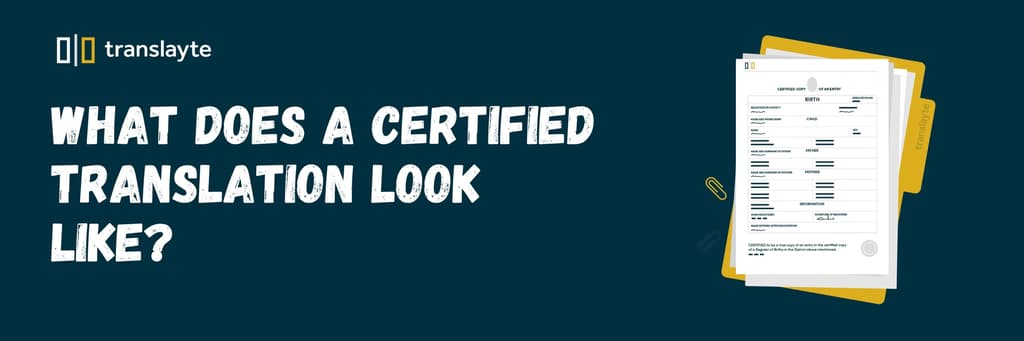
What does the translated document include?
The translated document is a complete, word-for-word translation of the original. As such, it must include;
Every piece of text: Dates, footnotes, reference numbers, headers, and body text, no matter how minor, must be included. Every sentence from the original must appear in the translation. Nothing should be summarised or skipped
Matching formatting: Headings, tables, and layout should match the original document.
Non-text elements noted in brackets: Stamps, seals, signatures, and photos should be indicated exactly where they appear. For example: [signature], [official stamp], [photograph of applicant]
Translator details: The translator's full name, contact information, and membership number (if part of an organization)
Certification statement: A signed declaration confirming the translation is accurate and complete
Signature: The translator's signature to authenticate the document
Note: When translating stamps, seals, handwritten notes, official markings, or photographs in the original document, you must represent these elements using descriptive brackets placed exactly where they appear. For example, write [signature] for a signature, [official stamp] for a stamp, or [photograph of applicant] for a photo. This ensures the translation is faithful and does not include elements not present in the original document.
Certified translation sample
Sometimes, the best way to understand certified translation is to see what it looks like. Here’s a certified translation sample.
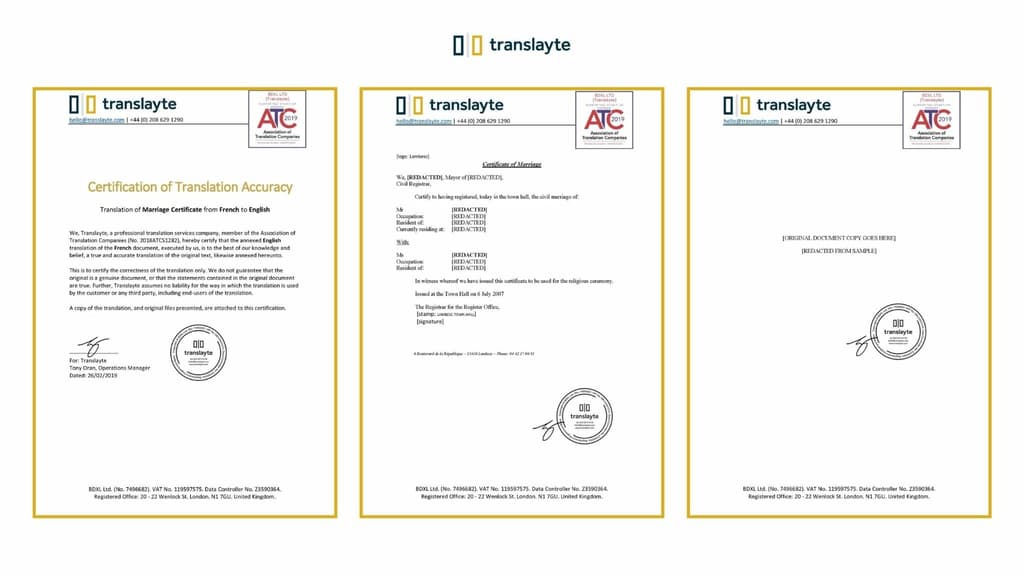
certified-translation-sample
Download certified translation sample
What is a certificate of accuracy in a certified translation?
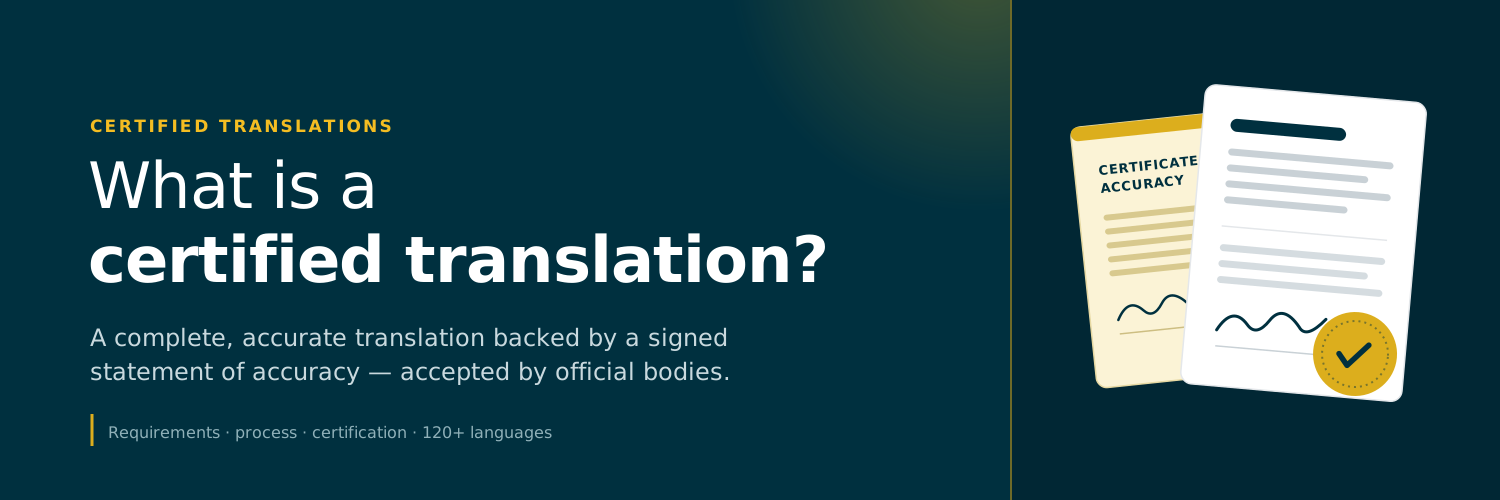
A certificate of accuracy is a signed statement attached to the translated document in which the translator confirms that the translation is complete and accurate to the best of their knowledge. They also confirm that they have no relationship to the client.
This certificate typically includes:
A statement of the translator's fluency in both languages
A declaration that the translation is a true and accurate representation of the original
The translator's full name, signature, and the date it was signed
Without this certificate, the translation is not certified.
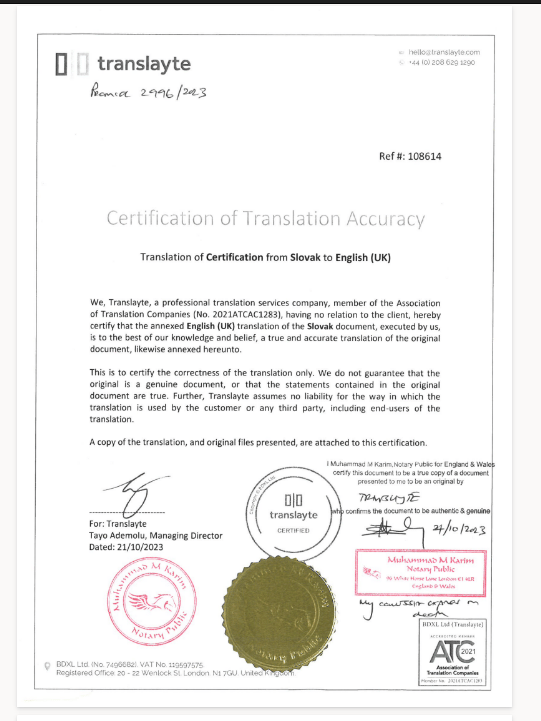
Certificate of accuracy sample
Recommended Reading
What is Certified Translation?
What details should the translator or agency provide?
Along with the certificate of accuracy attached to the original document, the translator or agency should include their full name, contact information, and membership/accreditation details. This adds an extra layer of credibility and allows the receiving authority to follow up or verify the translation if needed.
Some translation agencies will present this on official company letterhead, adding an extra layer of professionalism.
How is a certified translation formatted and delivered?
A certified translation is delivered digitally in PDF or printed and mailed to you upon request. It also includes a certificate of accuracy, either attached as a separate page or included at the end of the translated document.
Is notarisation required for a certified translation?
Usually, it’s not required, as a certified translation is sufficient in most countries. However, some authorities in countries such as Brazil, Germany, and China may require a notarised translation, in which a notary public verifies the translator’s identity and signature. In such cases, the notary also includes an official stamp or seal.
That said, all these extras aren’t always necessary. In the U.S., a signed certificate of accuracy from a professional translator is all that's required.
Why should you use a certified translation agency?
When submitting documents for official purposes, the last thing you want is a simple mistake to cost you a huge opportunity.
That’s why it’s best to work with certified translation agencies experienced in providing certified translations for your specific needs. This reduces the margin of error and ensures you only receive high-quality translations.
Here's what sets a certified translation agency apart:
Qualified, specialist translators: Agencies work with translators who are not only fluent in both languages but trained in specific subject areas, whether that's legal, medical, financial, or immigration documents.
Guaranteed accuracy: A reputable agency, such as Translayte, has multistep quality-control processes to ensure your translation is accurate and ready for official use.
Familiarity with requirements: Different institutions and countries have different formatting and certification requirements. An experienced agency knows what's expected and ensures your document meets those standards.
Legally recognised certification: Agencies provide properly formatted certificates of accuracy that are accepted by UKVI, USCIS, courts, universities, and other official bodies.
Confidentiality and data security: Professional agencies have secure data-handling practices that ensure sensitive personal documents are managed under strict confidentiality protocols, keeping your information safe.
Faster turnaround: With a team of expert translators and project managers, agencies can handle urgent requests without compromising quality, often delivering within 12 hours.
Single point of accountability: If there's ever a query or issue with your translation, you have a business to go back to, not just an individual.
Conclusion
When it comes to certified translations, the stakes are high. You cannot afford a misspelling, a wrong translation, or an incomplete one. You must get it right the first time, and to do this, you need to work with a highly experienced professional translation agency.
Using a certified translation agency gives you the confidence that your document will be accurate, properly certified, and accepted wherever it needs to go.