Can UK citizens apply for Sri Lankan citizenship?
Yes, you can totally apply for a Sri Lankan citizenship, but the route available to you depends on your personal circumstances and your existing connection to Sri Lanka.
The existing routes include; citizenship by descent, marriage, being a long-term resident, dual citizenship, or citizenship by investment.
If you don’t have any prior connection to Sri Lanka either through birth, parentage, marriage, or previous citizenship, you have limited options and may need to commit long-term to residing in or investing in the country.
Types of Sri Lankan citizenship available to UK nationals
Sri Lanka has several distinct routes to citizenship, each governed by the Citizenship Act No. 18 of 1948. These include;
Citizenship by descent
If you were born outside Sri Lanka but at least one of your parents was a Sri Lankan citizen at the time of your birth, you may be entitled to citizenship by descent under Section 5(2) of the Citizenship Act. However, your birth must be formally registered with either a Sri Lankan diplomatic mission abroad or the Department of Immigration and Emigration in Colombo.
This typically happens at birth or at any point before you reach the age of 22. If you’re over 22 and your birth was never registered, you’ll need to apply for exemption from local authorities and get legal advice.
Citizenship by marriage
If you’re married to a Sri Lankan citizen and have legally been resident in Sri Lanka for the required period, you can become a citizen by marriage. However, you must show evidence that the marriage is genuine, have a clean criminal record and comply with all visa and residency conditions.
Note: Applications under this route are reviewed under Sections 11 and 13 of the Citizenship Act and decided by the Minister. Marriage alone does not guarantee citizenship.
Citizenship by registration (Naturalisation and long-term residence)
If you have lived lawfully and legally in Sri Lanka for a significant period under a valid visa or residency scheme, you may be eligible to apply for citizenship through naturalisation.
To qualify, you will need to demonstrate:
A significant period of continuous, lawful residence in Sri Lanka, from five years or more.
Financial stability and self-sufficiency, through bank statements, property ownership, and more.
Genuine integration into Sri Lankan society and community life
Good character, with no serious criminal history in Sri Lanka or abroad
Note: Just like with the marriage route, meeting the general criteria does not guarantee approval. Applications are reviewed on a case-by-case basis.
Dual citizenship (Retention and resumption)
Sri Lanka permits dual citizenship, which means if you have Sri Lankan roots, you can be a citizen of both countries. However, this has a different application process and is divided into two categories;
Retention: For those who currently hold Sri Lankan citizenship and have acquired or are in the process of acquiring British citizenship. Without formal declaration to the Minister, you’ll lose your Sri Lankan citizenship upon naturalisation as a British citizen. The retention process prevents this from happening.
Resumption: For those who have already lost their Sri Lankan citizenship because they’re citizens of another country but now wish to reclaim it. This is the most common route for you as a UK citizen.
Who qualifies for dual citizenship?
To be approved for dual citizenship, you must meet at least one of the seven eligibility criteria set by the Department of Immigration and Emigration. These categories are labelled from A to G and cover different circumstances.
They include;
Category | Eligibility criteria | What this means in practice | Document evidence |
A | Aged 55 or above | You qualify based on age alone. No additional financial or professional criteria is required | Proof of age (birth certificate or passport) |
B | Professional qualification or academic expertise valuable to Sri Lanka | This includes doctors, engineers, academics, researchers, and other skilled professionals whose expertise could benefit the country | Certified copies of academic qualifications and professional credentials |
C | Property ownership in Sri Lanka valued at Rs. 50 million or more | The property must be registered in your name and its value independently verified | Property deeds, bank certificates, or investment account statements showing the value and duration of your financial commitment |
D | Fixed deposit of Rs. 2.5 million (or USD 25,000) held in a Sri Lankan bank for a minimum of 3 years | Funds must be locked in for the full term. Standard savings or current accounts do not qualify |
E | Investment in Treasury Bonds or a Securities Investment Account for a minimum of 3 years | A formal investment route for those who want to financially contribute to the Sri Lankan economy |
F | Spouse of a Sri Lankan citizen | You must be legally married to a current Sri Lankan citizen at the time of application | Marriage certificate and your spouse’s proof of Sri Lankan citizenship |
G | Unmarried child under the age of 22 of a Sri Lankan citizen | For dependent children. Getting married or turning 22 before approval disqualifies you | Birth certificate of the child, proof of the parent's Sri Lankan citizenship, and confirmation of the child's unmarried status |
Note: Any document not originally in English will require a certified translation before submission.
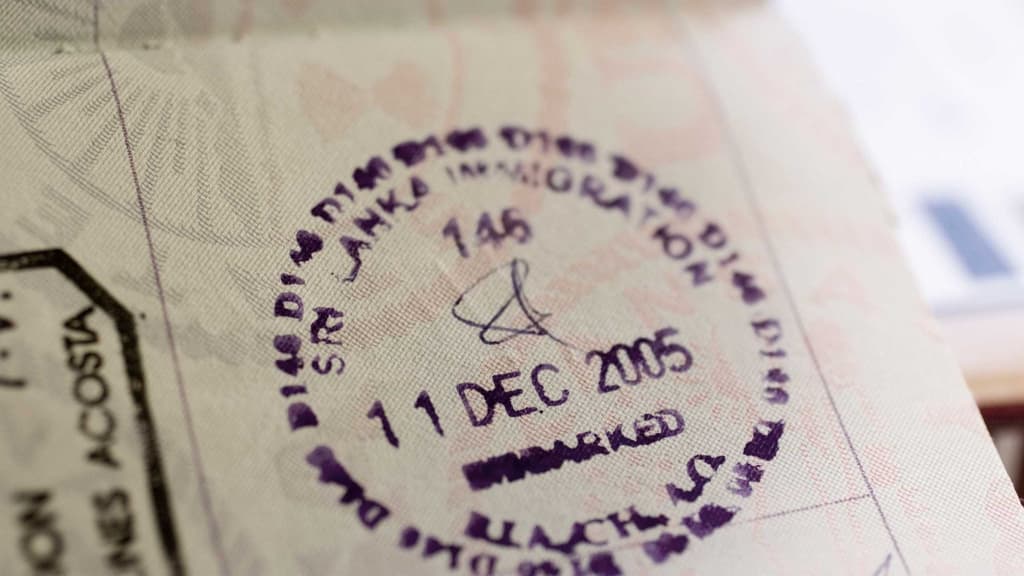
Stamped document for citizenship
Documents required for a Sri Lankan citizenship application
Identity documents
Valid UK passport
Birth certificate (original or certified copy)
National identity card
Completed application form (form DC/A for dual citizenship applications; Form B/C/R for citizenship by registration.)
Recent passport-sized photographs
Sri Lankan citizenship certificate: if you are resuming a citizenship you previously held.
Recommended Reading
UK Passport Document Requirements: A Complete Guide
Supporting documents
Proof of lawful residence in Sri Lanka (e.g. your visa, residence permit, or documentation from the Resident Guest Scheme.
Proof of residency status in the UK (e.g. your settled status confirmation, indefinite leave to remain documentation, or residence card.)
Recent bank statements
Proof of pension or regular income (especially for Category A (age-based) applicants.)
Property deeds (if you own property in Sri Lanka and are applying under Category C.)
Fixed deposit certificate (for Category D applicants.)
Investment account statements (if you’re applying under Category E via Treasury Bonds or a Securities Investment Account.)
Need a certified translation for your Sri Lankan citizenship application?
If your supporting documents need to be translated into English for the Department of Immigration and Emigration, you will need a certified translation, not a machine or informal translation. Some authorities also require the translation to be notarised, so always confirm with the Sri Lankan High Commission in London.
Services like Translayte provide certified document translations and notarisation that meet the requirements of the Department of Immigration and Emigration, and other authorities in Sri Lanka, with fast turnaround and online ordering.
Get a free certified translation quote today.
How to apply for Sri Lankan citizenship from the UK: Step by step
There are several routes available to you when applying for a Sri Lanka citizenship. Once you identify the route most appropriate for your situation, follow these steps;
Step 1: Check that you are eligible
Once you have identified your citizenship route, go through the eligibility criteria that applies to it and confirm that you meet all requirements.
Step 2: Gather your documents
Prepare all your documents based on your chosen route and ensure you have either original or certified copies of each document. For documents that are not in English, make sure to get certified translations ahead of time to avoid any delays.
Step 3: Download and complete the correct application form
Get the correct form from the Department of Immigration and Emigration website:
Complete the form carefully and in full. Incomplete or incorrect information may result in rejection. If any section does not apply to you, mark it clearly rather than leaving it blank.
Step 4: Pay the application fee
Pay the required fee before submitting your application. If you’re based in the UK, you can make payments in GBP at the Sri Lankan High Commission in London or via an approved payment method.
Step 5: Submit your application to the High Commission in London
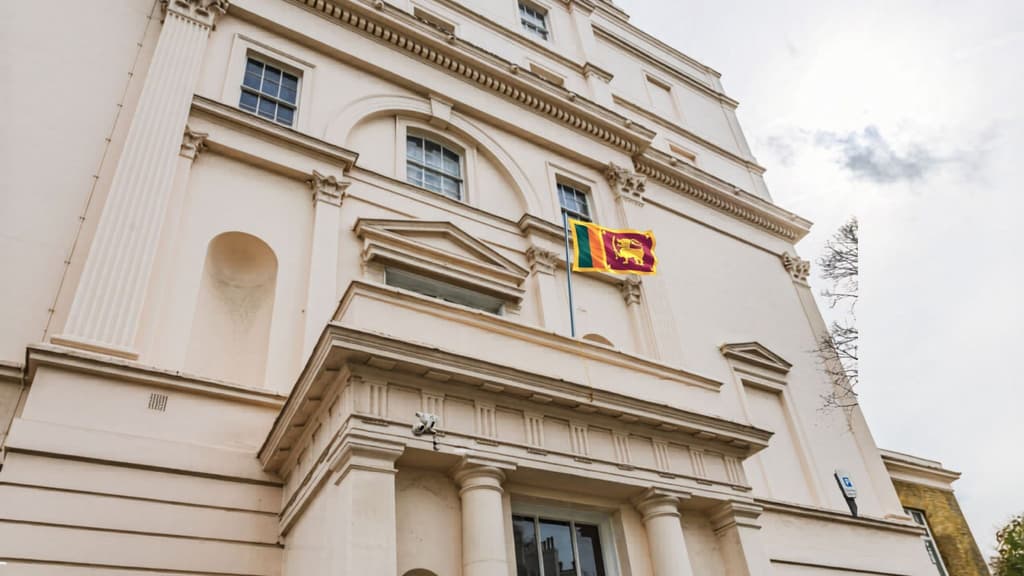
UK residents typically submit their applications through the Sri Lankan High Commission in London. You cannot submit a UK-based application directly to the Department of Immigration and Emigration in Colombo. You can only submit in Colombo if you’re currently residing in Sri Lanka.
Step 6: Attend your interview
Most applicants, especially those for dual citizenship or naturalisation will be called for an in-person interview at the High Commission. This is a standard part of the process so prepare well in advance.
Step 7: Wait for a decision
The review process for a Sri Lanka citizenship takes four months or longer, depending on the category and the volume of applications being processed. So be patient. You can monitor the progress of your application using the official status tracker on the Department of Immigration and Emigration website.
Step 8: Receive your approval and take the oath of allegiance
If your application is approved, you will receive a formal approval letter along with instructions for the next steps. For dual citizenship applicants, you are required to take an Oath of Allegiance before receiving your certificate. You can take the oath at the Department of Immigration and Emigration office in Colombo or the nearest Sri Lankan diplomatic mission abroad, including the High Commission in London.
Step 9: Collect your citizenship certificate
After you’ve taken the oath (if applicable) or your application is approved, you will receive your Certificate of Citizenship or Certificate of Dual Citizenship.
How long does a Sri Lankan citizenship application take?
The review process for a Sri Lanka citizenship takes four months or longer, depending on the category you’re applying under, how complete your document is at the time of submission, and the volume of applications being processed. There is no guaranteed turnaround time. But you can monitor the progress of your application using the official status tracker on the Department of Immigration and Emigration website.
How much does Sri Lankan citizenship cost?
The total cost of a Sri Lankan citizenship application depends on your chosen route, whether you’re including family members, and what additional services, such as certified translations you may need. There is no single flat fee, but here’s an estimate by application type;
Scenario | Estimated total cost |
Single applicant (dual citizenship) | USD 2,030 + £200–£400 in document and translation costs |
Family of four (dual citizenship, two adults, two children) | USD 3,060 + additional document and translation costs per family member |
Citizenship by registration (marriage) single applicant | Lower government fee + £200–£400 in document costs |
Complex case with legal support | Add £500–£2,000+ to any of the above |
What to do if your Sri Lankan citizenship application is refused?
Getting a visa rejection can be really frustrating. Oftentimes, it could be as a result of a mistake on your part, other times, it could be out of your control.
Nonetheless, if you get a rejection, don’t go tweeting uncontrollably or cussing at anyone. Here’s what to do instead;
Read the rejection notice to know why
Check if it’s something you can fix, maybe wrong documents or translation
Contact the relevant authority to fix possible errors
Get a lawyer if your case is somewhat complicated
If not, there’s usually a grace period for you to reapply. Fix all the problems and submit a stronger, complete application.