What is an official translation?
An official translation is a translation of documents, such as birth certificates, marriage certificates, academic transcripts, etc., with certification of accuracy or a sworn statement from an authorised translator or agency.
This type of translation is often required when submitting foreign-language documents for official purposes, such as visa applications, immigration, academic applications, or marriage in a new country. Students applying to study in these countries can find help from a custom dissertation writing service. A good dissertation writing service can help prepare academic documents. It will offer many products, including law dissertation writing services and essays.
The term “official translation” is often used interchangeably with certified, sworn, notarised, or legalised translations. Each involves a slightly different process, depending on the country’s legal requirements and the document's purpose.
For a translation to be legally valid, an authorised translator must complete it and include a formal declaration of accuracy.
In Portugal, a “certified translator” is very different from how it is known in other countries. For an official translation, different authorised entities can do it. This includes the Portuguese Notary Office, Central Registry, Civil Registry, the Portuguese consulate in the country where the document was issued, the Consulate representing the country where the document was issued in Portugal, Chambers of Commerce and Industry, and Lawyers and Solicitors.
A qualified translator can also produce a translation, but the work must be certified by one of the entities mentioned above. Before that, the translator's identity and the accuracy of the translation must be confirmed.
In Brazil, the process is a lot more specific. Certified translations must be carried out by a “tradutor público juramentado”, or sworn public translator. The government licenses these translators, and they register with a state’s Board of Trade (Junta Comercial). Their English-to-Brazilian Portuguese translations are automatically recognised by public institutions and courts across the country.
Official or certified translation requirements can vary by document type and the authority reviewing it. Visa offices, universities, and government agencies may each have different expectations regarding format, seals, or notarization.
Using a trusted translation agency that understands local requirements is important. A certified translation ensures your documents are professionally prepared, legally compliant, and ready for acceptance by Portuguese-speaking authorities without delays or rejections.
Which documents require certified translation?
Below is a list of documents that are commonly translated from English to Portuguese:
Countries that require applicants to translate documents into Portuguese
The following countries require visa applicants to translate documents between Portuguese and English.
Portugal
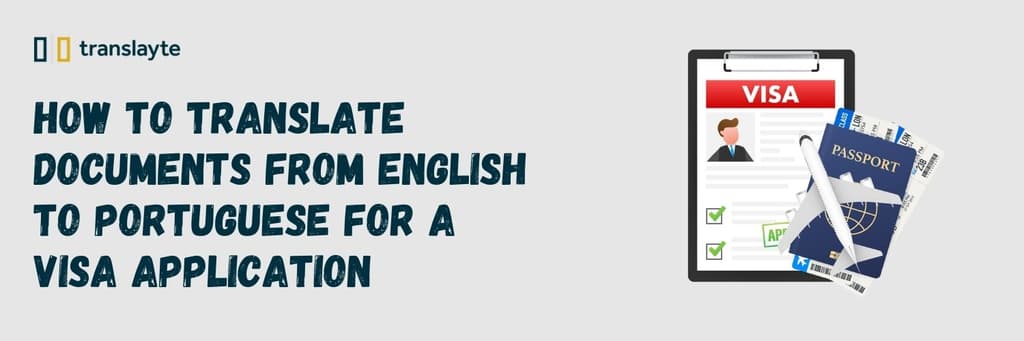
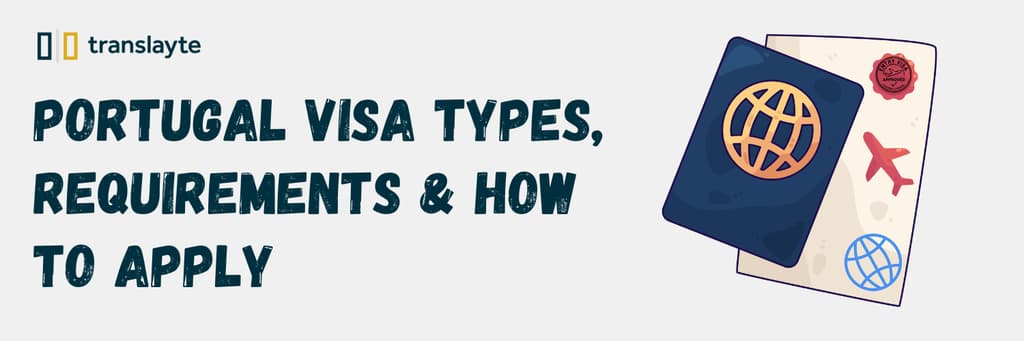
Portugal is the original country of the Portuguese language, but it is home to only about 5% of speakers globally. For national visa applications, Portuguese consulates such as the one in London accept documents in English or Portuguese, and ask for a certified translation only for documents in other languages (Portuguese consulate checklist). Once you are in Portugal, authorities such as AIMA and registry offices may ask for a Portuguese translation of foreign documents, so check before you submit. This means you’ll need a certified translation service in Portugal verified by a recognised entity such as a notary, lawyer, consulate, or the Chamber of Commerce. Translations may also require authentication through an apostille, depending on the country of origin. The embassy does not accept translations from individuals.
Brazil
Brazil has strict requirements for official documents. All foreign-language documents submitted for official use must be translated into Brazilian Portuguese by a “tradutor público juramentado” (sworn public translator). If you’re outside Brazil and need a certified translation in Brazil for official purposes, work with a sworn translator in Brazil or an approved translation agency. Brazilian consulates abroad set their own rules for visa documents, so check your consulate’s checklist before ordering a sworn translation.
Mozambique
These countries also require that official documents be translated into Portuguese for visa, education, or professional purposes. While Mozambique may not have a centralised registry of sworn translators like Brazil, the government still requires that translations be accurate, complete, and validated by a notary or the Mozambican consulate.
Angola
Certified translations in Angola must be performed by a certified translator and, in some cases, authenticated or legalised by the Angolan consulate or embassy in the country where the document was issued. Angola also requires that the original document be legalised (e.g., apostilled) before translation.
Guinea-Bissau, Cape Verde, São Tomé, and Príncipe
While requirements can differ between consulates, Portuguese remains the official language in all three countries. Applicants often must submit translated versions of key documents, especially for residency, work permits, or long-term visas. Translations typically need to be certified or notarised to be accepted by local authorities.
East Timor (Timor-Leste)
Although Tetun and Portuguese are both official languages, Portuguese plays a dominant role in legal and governmental procedures. Certified translations are required, especially when submitting documents to ministries, universities, or legal institutions. Consult the Timor-Leste consulate or embassy for specific formatting and notarization requirements.
Equatorial Guinea
Portuguese is one of Equatorial Guinea's three official languages, alongside Spanish and French. For certain visa categories and legal matters, especially involving regional partnerships or Lusophone exchanges, authorities may request document translations into Portuguese.

Types of certified document translation
Each country may have unique translation requirements for all visa applicants. Understand these differences and where to translate a document. Here are the major types of official document translation.
Notarized translation
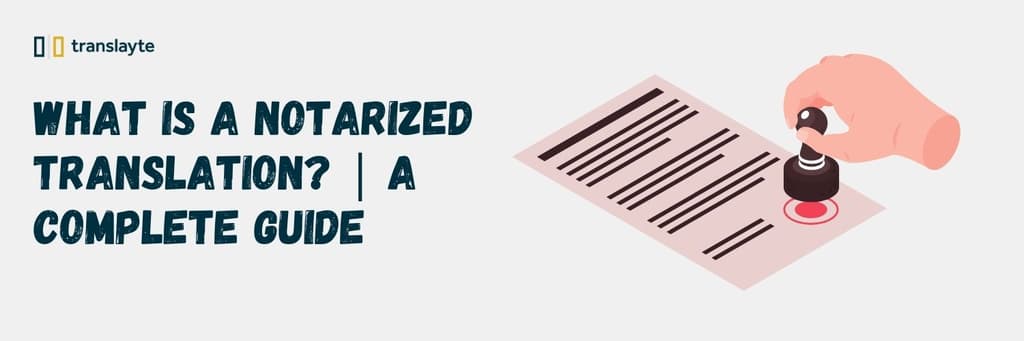
A notarised translation is an English-to-Portuguese translation process that requires the presence of a notary public. Under this arrangement, the translator completes the document and presents it to the notary public to certify that a professional completed it.
Certified translation
A certified translation is the most common official English-to-Portuguese translation and is done by a professional translator. After translation, the professional attaches a signed statement confirming the translation is accurate and complete.
Sworn translation
A sworn translation is done by a professional translator authorised by the judicial system (court) or government. Some embassies, especially Brazil and Portugal, may require the swearing to be done by a licensed legal entity located in the target country.
How to choose an official document translation service
Before translating your documents, research where and how to get them translated professionally. Look for authorised translators through legal entities, top translation companies, or immigration-approved institutions. Always check the embassy or consulate website to confirm whether the country requires a sworn, legalised, certified, or notarised translation.
Make sure the translator or agency you choose meets the specific requirements for your application. They should be reputable, experienced, and hold the necessary credentials. Avoid AI tools or machine translation, as they often produce errors that can lead to rejection of your documents. Translayte provides certified translations in different languages, including English to Brazilian Portuguese, English to Portuguese, Portuguese to English, and over 150 other languages.
Following the correct procedures and meeting every requirement ensures that your documents are accurate and legally valid. This not only helps immigration officials process your application more efficiently but can also help you avoid delays
Final thoughts
Visa applicants to Portuguese-speaking countries should take language translation requirements seriously. Accurate, certified translation makes the process smoother and helps avoid delays. Understand the requirements of each country and the type of translation required. Hire credible professionals and confirm whether they have the certifications or legal qualifications required for the process.