What is a certified translation?
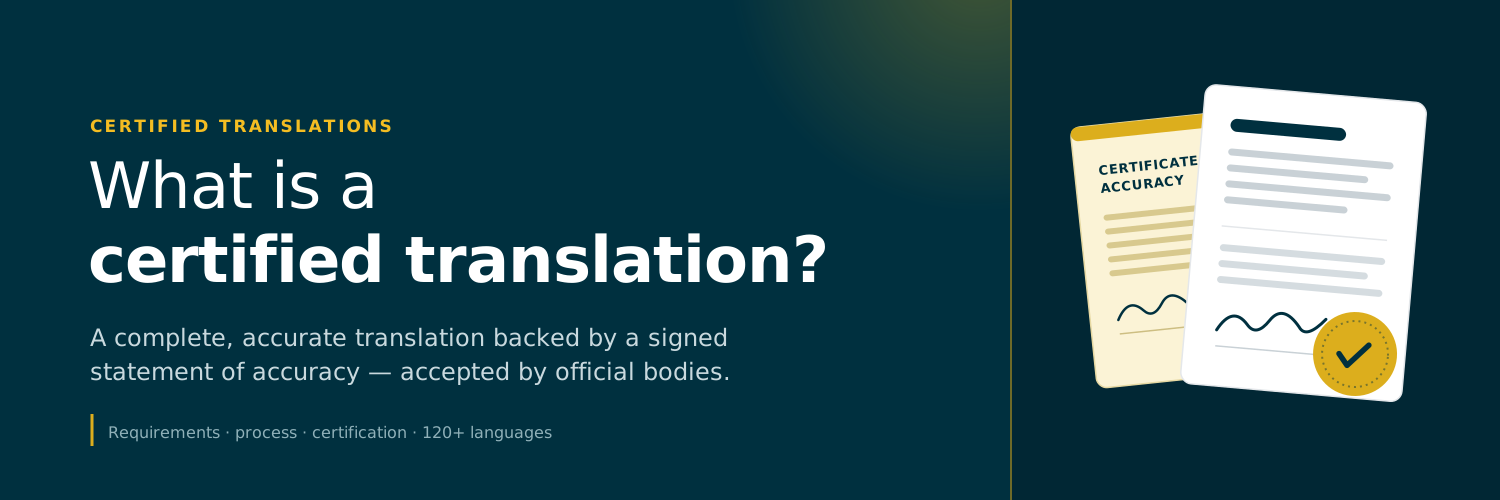
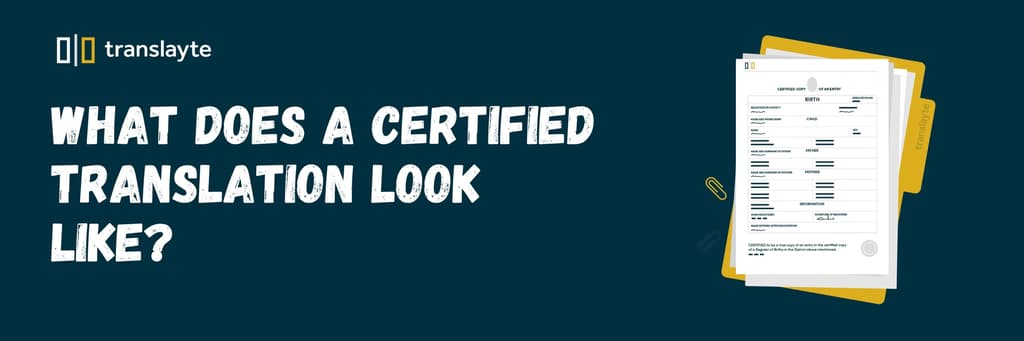
A certified translation carries a signed statement from the translator. The statement confirms the translation is accurate and complete. It usually includes the translator's name, contact details, and a declaration that they are competent in both languages.
The certification attests to accuracy. It says nothing about where the translator is located. A translation done in Warsaw can carry the same certification as one done in London or New York. As long as the statement meets the receiving authority's requirements, the translation is accepted regardless of the translator's location.
Does it matter where the translation was done?
For most immigration authorities, location is not the deciding factor. USCIS, UKVI, and IRCC do not require the translator to live in the destination country. They require the certification statement and the translator's credentials.
For example, USCIS allows any person competent in both languages to translate and certify the translation. UKVI offers similar flexibility, accepting translations from professional translators or translation companies worldwide, provided the certification meets its requirements.
However, French authorities, including OFII, expect certified translations to be issued by a sworn translator (traducteur assermenté) registered with a French court, a status tied to a specific list rather than a country. So while location usually isn't the deciding factor, the type of credential sometimes is.
Not sure whether your translation will be accepted? Translayte can advise on the translation requirements for USCIS, UKVI, IRCC, and many other authorities, helping you order the correct type of certified translation before submitting your documents.
Get a certified translation for your destination country.
When a home-country translation may cause issues
A home-country translation can cause problems when the receiving authority keeps its own list of approved translators. If no one on that list works in your home country, a translation from there will not be valid. For example, if you are submitting a translation in the UAE, it must be done by an MOJ-approved translator. A UK translator who is not on the MOJ list cannot produce a valid translation, even if they are fully qualified in the UK. Other countries with similar translator requirements include:
Spain requires a sworn translator (traductor jurado) authorised by the Ministry of Foreign Affairs.
France requires a traducteur assermenté registered with a Court of Appeal.
Brazil requires a sworn public translator (tradutor público) registered with the Commercial Registry (Junta Comercial) of a specific state.
Embassy lists often consist of translators based in the country or region. The US Embassy in Italy, the UK Embassy in Saudi Arabia, and many others follow this same principle. This makes it easier for applicants to post physical documents to the translator when a hard copy is required. If the embassy requires translations from its approved list of translators, location becomes important.
What to check before submitting a translation done abroad
Check the following before submitting a translation completed outside your destination country.
Does the certification statement include the translator's name, signature, date, and a declaration of accuracy and competency?
Can you verify the translator's credentials, for example, through a professional body or association?
If the receiving institution has published a list of approved translators or agencies, check whether the translator is on it.
If there is no list, confirm whether the authorities insist on a local translator or accept any competent translator.
For USCIS specifically
USCIS does not require translators to be based in the United States. Any person who is competent in both English and the original language can translate a document and certify that the translation is accurate. This means that a translation completed in your home country by a translator there is widely accepted by USCIS, as long as it includes the required certification statement. There is no requirement for the translator to hold a US-based qualification, work for a US company, or be physically present in the US.
For Canadian immigration (IRCC)
IRCC generally prefers translations completed by a member of a recognised translation association. This often includes members of a provincial or territorial organisation in Canada, or an equivalent professional body in another country. This means a translation completed in your home country by a translator there.
Quick reference table: what each authority requires
Authority | Does the location of the translator matter? | Key requirement |
USCIS (USA) | No | Competent bilingual translator with signed certification statement |
IRCC (Canada) | Preferred but not mandatory | Membership in a recognised translation association |
UKVI (UK) | No | Certified translation with translator's credentials and contact details |
French Authorities (OFII) | Yes | Must be a sworn translator (traducteur assermenté) registered with a French court |
Translayte provides certified translations in over 150 languages, delivered within 12-24 hours, prepared to meet USCIS, UKVI, and IRCC certification requirements.
Request a free quote.