



Which Type of Translation do You Need in Peru?
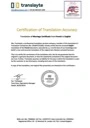
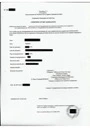
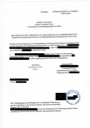
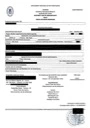
In Peru, legal, governmental or academic documents often require a certified or an official (sworn) translation. A certified translation is produced by a Traductor Colegiado Certificado registered with the Colegio de Traductores del Perú (CTP). In contrast, an official/sworn translation is produced by a Traductor Público Juramentado (TPJ) appointed by the Ministry of Foreign Affairs. However, for administrative procedures before Peruvian public authorities, Article 41.1.2 of Law 27444 allows a simple translation.
You need | Translation type | Who produces it | Common use |
A translation for a Peruvian administrative procedure that accepts a simple translation | Simple | Any person fluent in the language. The translation doesn’t require certification. The applicant or a third party can do it. The person performing the translation must be clearly identified and must sign the document. | Many administrative procedures |
A translation certified by the College of Translators of Peru (Colegio de Traductores del Perú) | Certified | A qualified professional translator registered with the Colegio de Traductores del Perú | Institutional, academic and other official processes where certification is required |
An official translation with public faith | Official / sworn | A Sworn Public Translator appointed by the Ministry of Foreign Affairs (Traductor Público Juramentado) | Procedures requiring an official translation |
A language or situation covered by Peru's special-translator framework | Special | A qualified special translator under the applicable rules | Certain less common language requirements |
What is a Traductor Público Juramentado in Peru?
A Traductor Público Juramentado (certified/sworn public translator) in Peru is an official translator appointed by the Ministry of Foreign Affairs (Ministerio de Relaciones Exteriores) to produce official, legally valid translations of documents.
Under the current framework, the Ministry accredits TPJs through a selection process. A certified public translator does not work for the Ministry and has no employment relationship with it. They are independent professionals who provide their translation services directly to customers.
A certified public translator can produce official translations from a foreign language into Spanish or from Spanish into a foreign language. The Ministry's current guidance also states that a TPJ may work in one or more languages and in one or both translation directions.
The MRE currently lists TPJs for nine languages: German, Chinese, French, English, Italian, Japanese, Polish, Portuguese and Russian. Sworn public translator fees are not set as a national fixed tariff.
Languages Without a Sworn Translator in Peru
Some languages do not have an appointed Traductor Público Juramentado in Peru.
If you need to translate documents from these special languages for a specific procedure that requires an official translation, a different route may apply. The exact requirements depend on the language, document and receiving authority. The special translator provision is a legal category under Peru's TPJ framework. The MRE maintains a Directorio de Traductores Especiales (Directory of Special Translators) for about 28 languages, registered with the Junta de Vigilancia de TPJ (Supervisory Board of Sworn Public Translators).
At Translayte, we will review your document's requirements and assign the translation to an approved translator to ensure it meets Peruvian requirements.
Does Your Translation Need an Apostille in Peru?
Your translation may require an apostille if you need to use a Peruvian document abroad in a country that is a party to the Hague Convention, or if you need to use a foreign document in Peru, as Peru is also a member of the Convention.
Foreign Documents Coming into Peru
If you are bringing a foreign document into Peru from a country that is a signatory to the Hague Apostille Convention, you might need an apostille. The apostille requirement applies if you submit any official or public foreign document to government agencies, courts, or institutions in Peru. When an apostille is required, it's generally safer to obtain it before translation. This prevents the apostille itself from becoming part of the material to be translated. You obtain the apostille in the country that issued the document, not in Peru.
Peruvian Documents Going Abroad
If you will use a Peruvian document in another country that is a party to the Hague Convention, it may need an apostille. You need legalisation if the country isn’t a party to the Hague Convention. The translation may also need additional certification, such as notarisation, depending on the destination country's requirements. Translations for documents requiring certification can be produced by either a Traductor Público Juramentado or Traductor Colegiado Certificado.
If your document needs an apostille, we encourage you to mention it to us before we start the translation. We can help you identify what needs translating and whether you need additional certification.
Documents we Translate for use in Peru
We translate documents for a wide range of personal, academic, legal and business processes.
Immigration and residency: Birth certificates, marriage certificates, police certificates, passports, and identity documents.
Academic and professional: University degrees, diplomas, academic transcripts, certificates of primary and secondary studies, professional qualifications, and documents for recognition of foreign qualifications.
Legal: Court documents, divorce decrees, powers of attorney, notarial documents, contracts, judicial background checks, and legal certificates.
Business: Articles of incorporation, company documents, financial statements, contracts, tender documents, certificates of free sale, and commercial certificates.
If you are not sure whether your document can be translated, upload it, and we can review the requirements before you order.
How Sworn Translation in Peru Works
Here’s how Translayte’s sworn translation service in Peru works.
Upload Your Document
Upload a clear scan, photograph, or digital copy of your document. Select Spanish and the other language you will be translating from or into.
Confirm the Service
Choose the service you need, whether certified, sworn, apostille or notarisation. You can also select additional requirements, such as expedited turnaround or paper copy delivery via courier.
Document is Translated
A qualified translator prepares the translation based on the service you ordered.
Standard translation turnaround is 12–24 hours. Longer documents, complex formatting, uncommon languages, and additional certification requirements may increase turnaround time. If your order requires an apostille, notarisation, or other certification, let us know. We provide all of this accurately. Please note that these additional requests can extend the overall turnaround because timing depends on the relevant authority.
Receive Your Translation
We will send your translation digitally where the receiving authority accepts a digital copy.
If you need a sealed physical document, we will arrange its delivery. Official and specially formatted documents may need to be printed, signed, sealed or otherwise prepared in physical form.
Turnaround and Pricing
Our official translation service starts from $41.27 (138.35 SOL) per page, delivered in 12–24 hours for standard 1–3-page documents. However, factors like page count, language pair, certification, and complex formatting can extend the delivery timeline. We always communicate the delivery timeline and cost when you order. If you are unsure, you can request a free quote to get pricing and turnaround time for your project.
What can Cause a Translation to be Refused in Peru?
A translation can be returned when it does not meet the requirements of the Peruvian authority receiving it.
Submitting a simple translation when the authority and procedure require certification or an official translation.
Submitting a translation from a language that has no appointed TPJ, without using the special-translator route, can lead to refusal.
The receiving authority may reject your translation if it lacks the required certification or signatures, seals, or other formalities.
For foreign documents, apostilling after translation can force a second translation of the apostille itself.
Names should match the source document and, where relevant, the applicant's passport or identity document. Differences can create problems later in the process.