




What is a Sworn Translation in Germany?
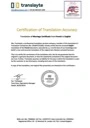
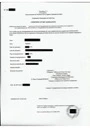
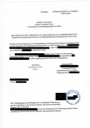
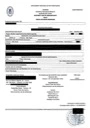
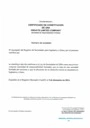
A sworn or certified German translation is produced by a court-authorised translator registered with a regional court (Landgericht), also known as a State Certified Translator. Their sworn statement, signature, and official stamp confirm that the translation is a true and accurate copy of the original document. The stamp shows the translator's name, the languages involved, and their address.
In Germany, translations of non-German documents submitted to any authority as part of an official application must often be performed by a sworn translator (beeidigte Übersetzer).
Sworn translators are authorised to translate from select languages into German. Translayte assigns your order to a sworn translator based in Germany and authorised locally.
Sworn translations are typically needed for civil status documents such as birth, marriage, and death certificates; academic records including diplomas, transcripts, and qualifications; legal documents like court orders, contracts, and adoption papers; immigration documents for residency and passport applications; and medical, technical, or business documents requiring subject expertise.
Every sworn translator in Germany is listed in the official Dolmetscher- und Übersetzerdatenbank run by the state justice administrations. The Auswärtiges Amt points applicants to the same register. It also states that translations are expert services, not public documents, so German embassies cannot certify them. Choose the right translator or translation service before you order.
Which Translation Will German Authorities Accept?
Translation type | Accepted in Germany? | What to do |
Sworn translation by a translator sworn in Germany | Yes. This is the standard German requirement. | Order a sworn German translation. |
Certified translation from a UK or other non-German translator | Only by some institutions. Others require a translator sworn in Germany. | Ask the receiving authority first, or order a sworn translation to be safe. |
UK-certified translation with an apostille | Accepted by some institutions. | Confirm the authority's requirements before ordering. |
Documents That Require Sworn Translation in Germany
Civil status: birth certificates, marriage certificates, divorce decrees, change of name documents, death certificates
Academic and professional: diplomas and transcripts, professional qualifications and licences, training certificates, references and employment records
Legal and court: court orders and judgments, contracts and agreements, adoption papers, power of attorney
Identification and travel: passports and visas, police clearance certificates, driving licences, medical records
Financial and business: bank statements, tax returns, business documents, articles of incorporation.
Where Sworn Translations Are Required in Germany
These are the common institutions that ask for sworn translations:
Standesamt (Civil Registry Office): Civil status documents are usually submitted with a sworn translation produced by a translator sworn or authorised by a German court. If the document needs an apostille or legalisation, it goes on the original first before it is translated. Registries often want a Ledigkeitsbescheinigung or Ehefähigkeitszeugnis that is no older than six months.
Ausländerbehörde (Foreigners' Office): under § 23 VwVfG the authority can require a German translation of any foreign-language document and, in justified cases, one from a publicly appointed or sworn translator. Practice varies by office, so ask which of your documents it wants sworn.
Jugendamt (Youth Office): for a Sorgeerklärung, parents must understand the declaration. Berlin's Jugendamt requires an interpreter when a parent's German is insufficient, and that interpreter does not have to be sworn. However, if the documents you submit with the declaration are in another language, they may need sworn translations.
Qualification recognition (Anerkennung): recognition offices require translations of foreign certificates by a publicly appointed or sworn translator, in Germany or abroad. Documents in English language documents do not need to be translated, according to the Rhineland-Palatinate recognition office. Other states may differ.
Sworn Translation vs Standard Certified Translation: When do You Need Each One?
For German authorities, the default requirement is a sworn translation. A standard certified translation, which is where a translator or translation agency certifies the translation directly, is mostly required by private organisations.
Receiving institution | Standard Certified Translation | Court-sworn translator/ Sworn translation |
Standesamt | Not accepted in practice | Mandatory. The translator must be sworn or authorised by a German court |
Ausländerbehörde | At the office's discretion | Mandatory when the office requires it. |
Jugendamt | Ask the office | Safest for foreign documents. Not needed for an interpreter at a Sorgeerklärung appointment (Berlin). |
Universities (via uni-assist) | Not accepted | Mandatory. The translator is authorised to translate under oath, or the issuing school |
Qualification recognition offices | Not accepted | Mandatory. The translator must be publicly appointed or a sworn translator in Germany or abroad |
Courts | Not accepted | Generally expected |
Employers, insurers and banks | Often accepted | Use it if the institution asks |
Use outside Germany | Accepted in the UK and USA | Not required |
What Details Must be Included in a Sworn German Translation?
The exact requirements may vary depending on the institution requesting the translation. However, here are some common details that are often included:
Translator's Statement: The translation should contain a statement from the translator attesting to their qualifications and confirming that the translation is accurate and complete to the best of their knowledge and abilities. This statement is usually positioned at the beginning or the end of the translated document.
Translator's Contact Information: The translator should provide their full name, address, phone number, and email address so that they can be contacted if necessary.
Certification Statement: The translation should include a statement indicating that it is a certified translation. This statement confirms that the translator is authorized or recognized as a certified translator, either by a professional association or a relevant authority.
Official Seal or Stamp: Many certified translations require an official seal or stamp from the translator. This seal may include the translator's name, certification number (if applicable), and other identifying information. The seal authenticates the translation.
Date of Translation: The date on which the translation was completed should be mentioned to indicate the currency of the translation.
Signature: The translator typically signs the certified translation, indicating their acceptance of responsibility for the accuracy and completeness of the translated document.
Can I Get a Sworn Translation for Germany If I’m Abroad?
Yes, you can obtain a German translation for use in Germany even if you're outside the country. Many sworn or certified translators offer remote services, and many translation agencies work with them, including Translayte. You can send a scanned copy of your document, and they'll send you back a certified translation.
When ordering from abroad, keep these points in mind:
Translator recognition: The translator must be officially sworn in Germany and registered with a regional court (Landgericht). Translations by “certified translators” from other countries may not be accepted by German authorities.
Delivery format: Many German institutions require the original signed and stamped paper translation, so allow time for postal delivery from Germany.
Data protection: Ensure secure transfer of sensitive documents in compliance with GDPR.
Additional certification: Some documents may require notarisation or an Apostille for use in Germany or abroad, especially under the 1961 Hague Convention. See the Auswärtiges Amt overview of the states it applies to, and check the requirements of the German institution.
Can a UK-Based Translator Certify a Translation for Germany?
A UK-based translator can certify a German-English or English-German translation with a signed Certificate of Accuracy. The UK has no sworn translator system like Germany. Some German institutions accept UK-certified translations, some also require an apostille, and others insist on a translator sworn in Germany.
If you're submitting a translation to a German authority or institution, check their specific requirements first or order a sworn translation through Translayte to avoid the risk.
Authentication: Apostille & Legalisation
To use documents at foreign embassies in Germany or in another country, you may need to obtain an Apostille. This makes the translation acceptable in other countries that are part of the Hague Convention.
In Germany, translations cannot be legalised, even if they have been completed by a sworn or certified translator, as they are not considered "public documents". However, the president of an applicable court can issue a certificate verifying the translator's "sworn" or "certified" status. This certificate, which is considered a public document, can then be legalised, with an Apostille affixed to the certificate.
Sworn German translations that are legalised by Translayte are first certified by the sworn translator, with a certificate obtained from a local German court, then legalised at the Apostille Office in Germany. You can ship the original document within Germany or internationally.
Note: The Hague Convention has 130 contracting parties, according to the HCCH status table (30 June 2026). Germany has objected to some accessions, so the Convention does not apply between Germany and those states, including India, Morocco, and Vietnam. Check the Auswärtiges Amt list before you order.
Translating German Documents for Use Abroad
If you have German documents such as a birth certificate (Geburtsurkunde), marriage certificate (Heiratsurkunde), or academic certificate (Abiturzeugnis) and need to use them in an English-speaking country, you need a German-to-English translation that meets the receiving country's requirements.
Destination | What the receiving authority requires |
Certified translation with a certificate of accuracy signed by the translator (and agency), showing full name, contact details and date. The translator does not need to be sworn. | |
Certification statement from the translator confirming competence in German and English and that the translation is complete and accurate. The translator does not need accreditation. | |
Translation by a NAATI-accredited translator | |
Certified translator for Canadian authorities |
A German translation that is valid in Germany is not automatically valid abroad, and the reverse is also true. If the receiving country requires an apostille, it must be affixed to the original German document. Translayte provides apostille and notarisation services so you can get all your document needs in one place. Confirm with the receiving authority before you order.
Why Choose Translayte For Your Sworn German Translations?
With years of experience and thousands of satisfied clients worldwide, Translayte is trusted by individuals, businesses, and legal professionals for court-compliant sworn German translations. We combine professional expert translations with a 100% acceptance guarantee to ensure your documents meet German authorities' strict standards.
Expertise: Our team consists of highly skilled and experienced German-approved sworn translators, editors, and proofreaders specialising in various industries and languages. We guarantee precise translations that capture the nuances and subtleties of your original content.
Quality Assurance: We follow a rigorous, multi-step quality assurance process, including multiple rounds of proofreading and editing to ensure your translations are accurate, clear, and culturally appropriate.
Fast Turnaround: We understand the importance of meeting deadlines and are committed to delivering your translations on time, without compromising quality. We offer flexible turnaround times to suit your project needs and can accommodate urgent requests.
Confidentiality: We take data privacy and security seriously. Strict non-disclosure agreements bind all our team members, and we implement the latest encryption technologies to protect your files and information.
Personalized Service: We value our clients and provide personalized attention for each project. Our responsive customer support team is available 24/7 to address your concerns and answer any questions.
Nationwide Coverage: We offer certified translations across all cities in Germany, including Berlin, Munich, Hanover, Bremen, Hamburg, and Stuttgart, ensuring reliable service wherever you're located.
How We Work
Our streamlined process at Translayte delivers the highest-quality translations as efficiently as possible. Here's a step-by-step overview of how we work:
Project Evaluation: Once you submit your project, our team reviews your content, discusses your specific requirements, and provides a detailed quote and estimated turnaround time.
Translator Assignment: We carefully select a professional Sworn German translator with relevant industry expertise who is fluent in the source and target languages. This ensures that your translations are not only accurate but also resonate with your target audience.
Translation Process: Our translator will meticulously translate your content while preserving the original message, tone, and style. They will also ensure that the translation is culturally sensitive and appropriate for your target audience.
Quality Assurance: After the translation is completed, a second linguist will proofread and edit the content to ensure it is free from errors and inconsistencies. This rigorous quality control process guarantees the highest standard of accuracy and readability.
Final Delivery: Once the translation passes our quality assurance checks, we will deliver the final, polished version in your preferred format. Our customer support team will remain available to address any questions or concerns you may have.
We take pride in our work and are committed to exceeding your expectations. Trust Translayte for all your linguistic needs and experience the difference that exceptional translation services can make for your business.
How to Order an Official German Translation Online
Navigate to "Check Prices & Place Order" on the top right side of this page.
Select "Certified Translation".
Select the source and target languages, respectively.
Upload the official document you need to be translated.
If you want expedited services, select that option. Provide any extra instructions after this.
Select the type of certification you require (Also indicate if you need notarisation or apostille services)
Click "PROCEED TO ORDER"
Make the payment securely online. Once you place your order, our team will assign it to a professional translator, and you'll receive the translated document by email or post within the specified timeframe.